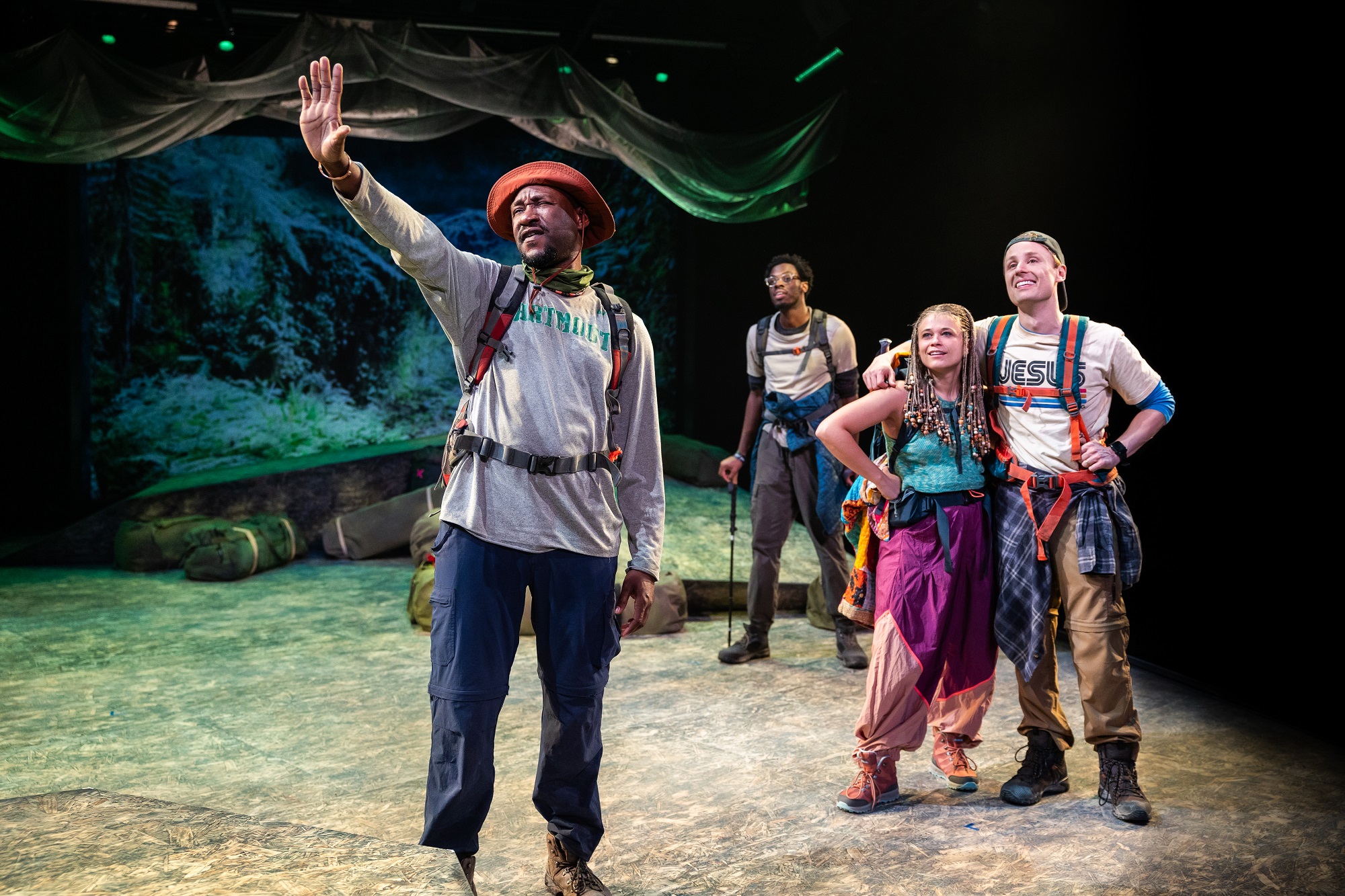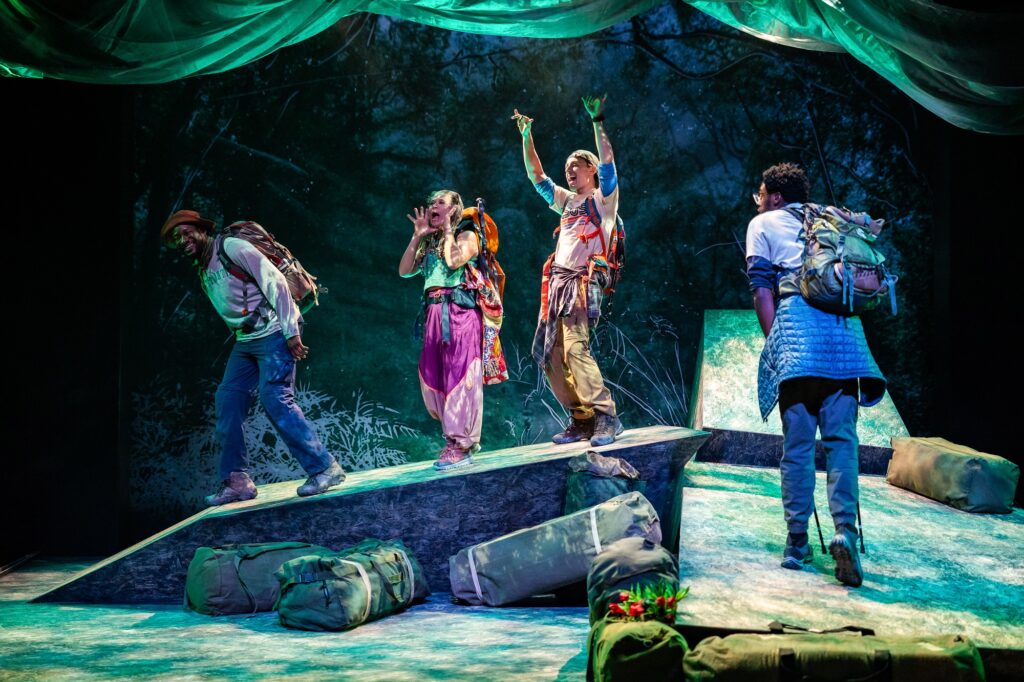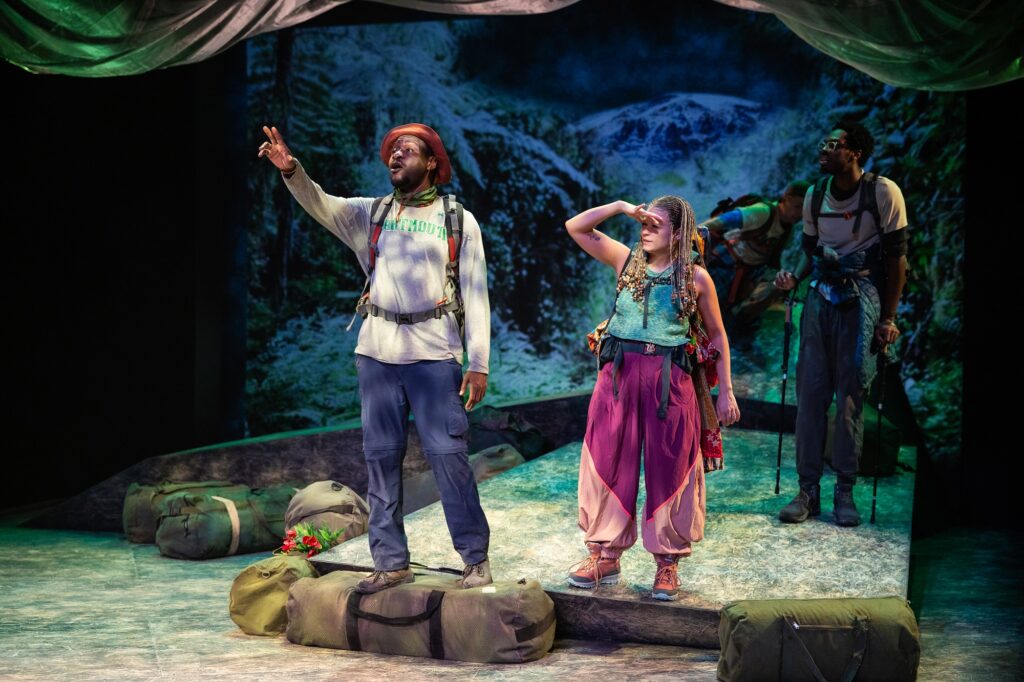
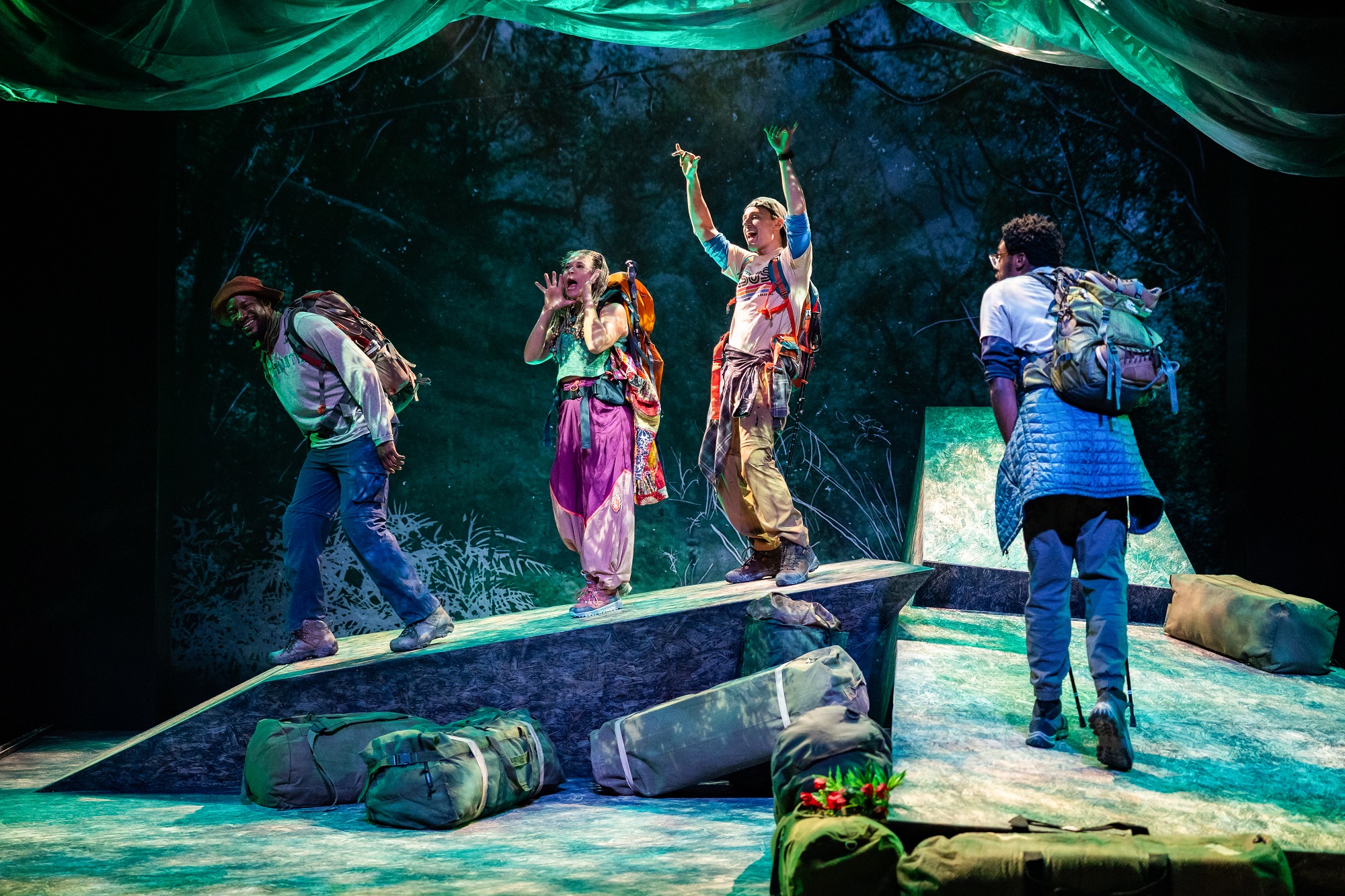
When I sat down for a Q&A with Uhuru’s projection designer, Lacey Erb, I was interested in hearing about how she balances the technical side of projection design with the emotional storytelling of a production. Her answers gave me a better understanding of what goes into creating the visual world of Uhuru, from finding the right imagery to making sure the projections work naturally with the set and story.
Lacey explained that her design process begins simply:
“The first thing I do with a new script is to just read through it, take it in. See what in the story pulls on me… Once I’ve done that, then I will go back and read it again, more methodically this time. Thinking about the imagery that might support and enhance the text.”
That first emotional reaction to the story was especially important when Lacey began working on Uhuru. She was drawn to the individual journeys of the characters and how each of them is searching for something that will make them feel whole. From there, the challenge became figuring out how projection could support those stories without distracting from the dialogue. The design also had to incorporate Kiswahili translations, in a way that would not compete with the actors on stage for the audience’s attention.
One of the things I found most interesting during my conversation with Lacey was how often projection design can go unnoticed by the audience. As Lacey explained, “when it is done well you notice its effect, but don’t always recognize that it is projection.” That idea really stood out to me because it shows how projection design is often meant to blend into the larger production. Instead of being something the audience focuses on, it can quietly shape the atmosphere, setting, and emotions of a scene.
Lacey’s interest in theater started much earlier than her career in projection and media design. She remembered participating in elementary school productions, including a stylized reading of Ray Bradbury’s The Halloween Tree and A Midsummer Night’s Dream. These early experiences introduced her to the possibilities of light, color, and live storytelling. After earning her BFA, Lacey spent years designing lighting for dance and theater. Her interest eventually shifted toward video and projection after seeing work at London’s National Theatre and experimenting with video alongside other designers. That curiosity eventually led her to graduate school, where she was able to focus specifically on projection and media design.
Because projection and media design are constantly changing, Lacey emphasized how important it is to stay adaptable and keep learning. New tools and software are always being introduced, so being willing to experiment and learn quickly can make a big difference.
For anyone interested in getting into projection design, her advice was simple: reach out. Designers whose work inspires you are often more willing to share their experiences and knowledge than you might expect. Building those connections and being curious about other people’s work can be a great way to start learning about the field.