Juneteenth is a celebration of freedom, but it is also a reminder that freedom did not arrive all at once.
On June 19, 1865, Union troops arrived in Galveston, Texas, and announced that enslaved people in Texas were free. The news came more than two years after the Emancipation Proclamation. For Black Texans, that moment marked a historic turning point, but it was also the beginning of a much longer journey.
Freedom had to be lived. Families had to find one another. People had to search for work, safety, land, community, and home. Formerly enslaved people had to build lives in a world that had not yet made room for their full humanity. That journey is at the heart of August Wilson’s Joe Turner’s Come and Gone.
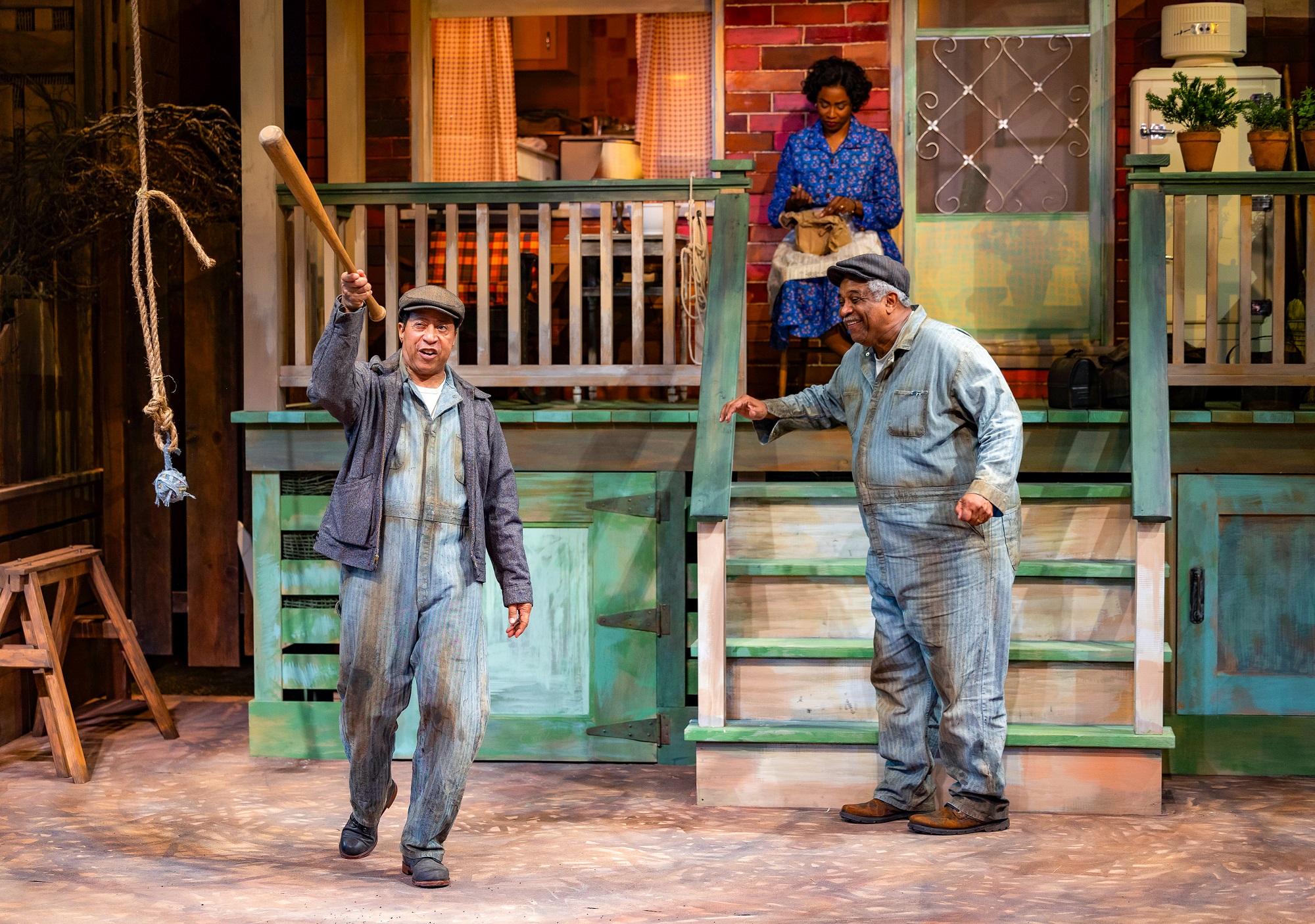
Set in a Pittsburgh boardinghouse in 1911, the play follows Herald Loomis, a man traveling with his young daughter, Zonia, as he searches for his wife. Years earlier, Loomis had been taken by Joe Turner and forced into labor for seven years. Though he is no longer physically captive, his life has been deeply disrupted. His family has been separated. His sense of self has been shaken. He is free, but he is still trying to come back to himself. This is where Wilson’s work speaks so clearly to Juneteenth.
Joe Turner’s Come and Gone reminds us that the end of slavery did not mean the end of harm. After emancipation, Black communities continued to face forced labor, racial violence, economic exploitation, and family separation. The play does not tell the specific story of Galveston or Houston, but it speaks to the same larger truth… freedom was not simply announced. It had to be claimed, protected, and built. For Herald Loomis, that process is described as finding his song.
In the play, a person’s song is more than music. It is identity. It is memory. It is spirit. It is the part of a person that says, “I belong to myself.” Loomis’s journey is not only about finding his wife. It is also about finding the part of himself that was stolen, buried, or broken. That idea has deep meaning in a city like Houston.
After emancipation, formerly enslaved people came to Houston and built communities where freedom could take root. In Freedmen’s Town, they built homes, churches, schools, businesses, and civic life. Brick by brick, they created a neighborhood that stood as a powerful expression of Black self-determination.
Freedmen’s Town is part of Houston’s living Juneteenth story. It carries the memory of people who turned uncertainty into community. People who made a way out of very little. People who understood that freedom was not just about leaving bondage, but about creating a place to belong.
That is also what makes Wilson’s work so powerful. His plays honor the everyday lives of Black people with care, humor, beauty, and truth. He writes about people carrying history in their bodies, in their voices, in their kitchens, in their work, in their arguments, in their prayers, and in their music.
Music is especially important in Joe Turner’s Come and Gone. Wilson understood that Black communities have long used music to hold memory. Spirituals, work songs, blues, gospel, jazz, and spoken word have all carried stories of grief, survival, joy, resistance, and hope. Music has been a way to say what could not always be safely spoken. It has been a way to remember who we are.
That is why the idea of “finding your song” feels so connected to Juneteenth. After freedom was announced, people searched. They moved. They reunited. They worshiped. They worked. They built. They sang. They created culture out of survival and community out of uncertainty.
This staged reading of Joe Turner’s Come and Gone invites Houston audiences to sit with that history through the power of theatre. Directed by Steve Scott and presented at The Ensemble Theatre, the reading continues a meaningful collaboration between Alley Theatre, The Ensemble Theatre, Rutherford B. H. Yates Museum, and the City of Houston’s Mayor’s Office of the Arts. As partners, we are using the arts to connect history, community, and storytelling in ways that feel immediate and alive.
This work also builds on previous collaborations, including the staged reading of August Wilson’s Radio Golf in Freedmen’s Town. That reading explored heritage, preservation, development, and the cost of progress. With Joe Turner’s Come and Gone, the conversation moves further back in time, closer to the generations who first stepped into freedom and began asking what life could become.
As Houston celebrates Juneteenth, this reading offers a chance to reflect on where we come from, what we carry, and how stories help us remember. It is an invitation to gather in community, honor Black history, and experience one of August Wilson’s most critical works.
August Wilson’s most significant work will be featured as part of a Juneteenth celebration hosted by Alley Theatre, The Ensemble Theatre, the Rutherford B. H. Yates Museum, and the City of Houston Mayor’s Office of the Arts.
This project is supported by an Our Town award from the National Endowment for the Arts.