There’s something undeniably satisfying about a thriller that keeps you guessing. A mysterious disappearance. An unreliable witness. A suspect with the motive to kill. And most importantly, twists that force you to question everything. Alfred Hitchcock perfected these elements of suspense, and his influence can still be felt in stories that captivate audiences today.
The Alley has recently produced the explicitly Hitchcockian Dial M For Murder, which makes use of many of the famous tropes described below. But these tropes extend far beyond the work of Hitchock himself, reverberating through the stories of more contemporary writers.
The Girl on the Train continues in this tradition, with the use of an unreliable narrator and a mind-bendingly subjective point-of-view. This gripping mystery feels right at home alongside Hitchcock’s greatest works.
The Hitchcockian Formula
When people describe a story as “Hitchcockian,” they’re referring to more than just suspense. Hitchcock developed a storytelling formula that has inspired generations of writers and filmmakers.
One of his signature devices is the ordinary person caught in extraordinary circumstances, often called “the wrong man.” Rather than focusing on detectives, Hitchcock frequently placed everyday people at the center of the story. Think of Marion in Psycho, or Jeff in Rear Window. These are normal people–a secretary and a photographer–who are drawn into a web of murder and psychosis.
Hitchcock also mastered voyeurism, the unsettling feeling of watching others and being watched ourselves. By construing these stories through the eyes of his characters, Hitchcock allows the audience to assume the role of investigator. Like his protagonists, we are only given a partial glimpse of the truth, and must piece together a reality from the fragments.
These elements have become the blueprint for countless thrillers, including The Girl on the Train.
Rachel: An Unlikely Detective
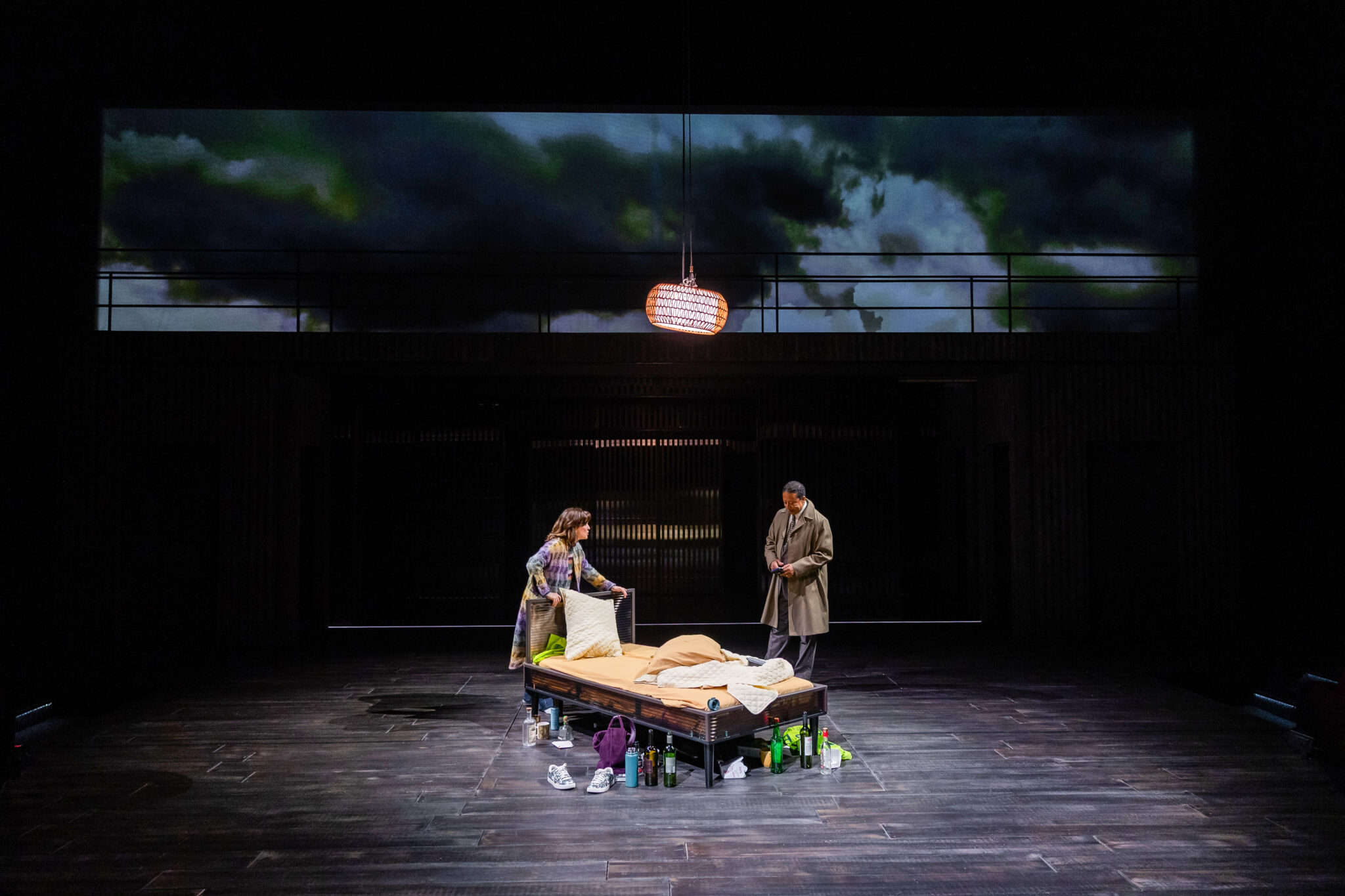
Like many Hitchcock protagonists, Rachel Watson isn’t a detective. She’s an ordinary woman struggling to rebuild her life after a painful divorce. At first, she fills the void in her life with drink. That is, until she is unwittingly drawn into the center of a missing-persons investigation, which begins to give her life meaning.
The mechanism by which Rachel becomes involved with this investigation is explicitly Hitchcockian, playing on his famous voyeurism trope. Each day, Rachel rides the same commuter train, and watches the lives of strangers as she passes by their houses. She becomes infatuated with a particular couple, and begins to construct a fantasy about their life. When the wife of this couple goes missing, Rachel feels that she’s lost a dear friend–even though it’s a woman she’s never met.
It is this parasocial obsession that brings Rachel into the story. But her own private investigation is blurred, both by her alcoholism and by her assumptions surrounding this mysterious woman. In this way, Rachel becomes the perfect unreliable witness, serving as a clouded lens through which the audience sees the story.
It is up to the viewer to decide what–and who–to believe.
If you’ve ever loved the suspense of Hitchcock then The Girl on the Train is your next unforgettable ride.