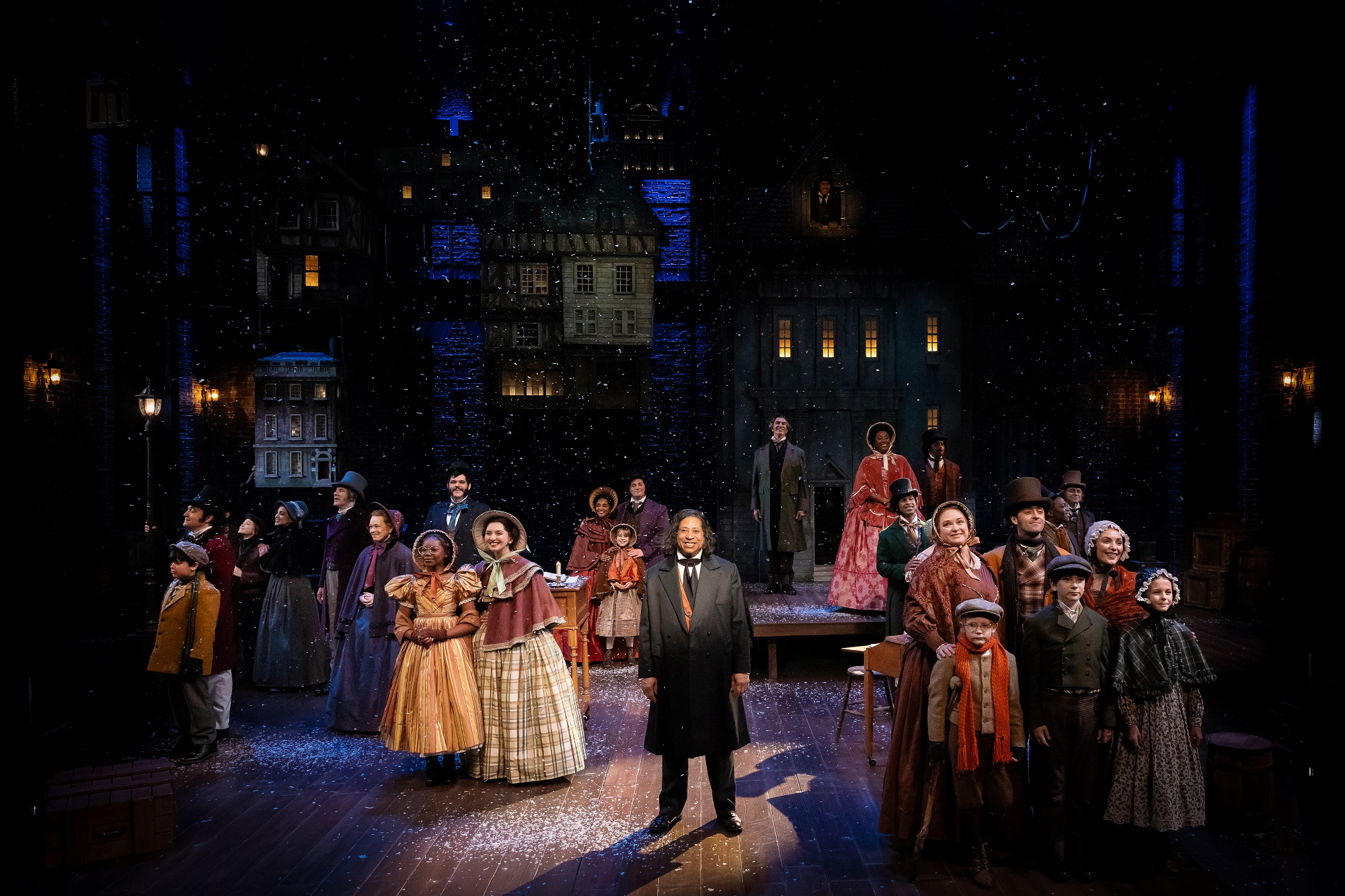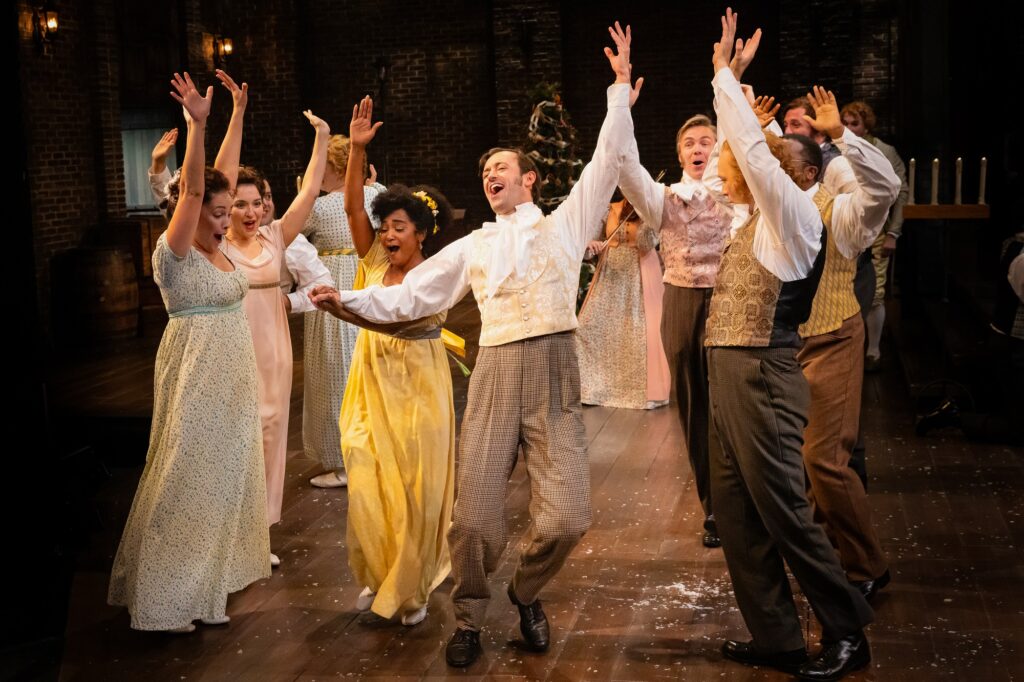
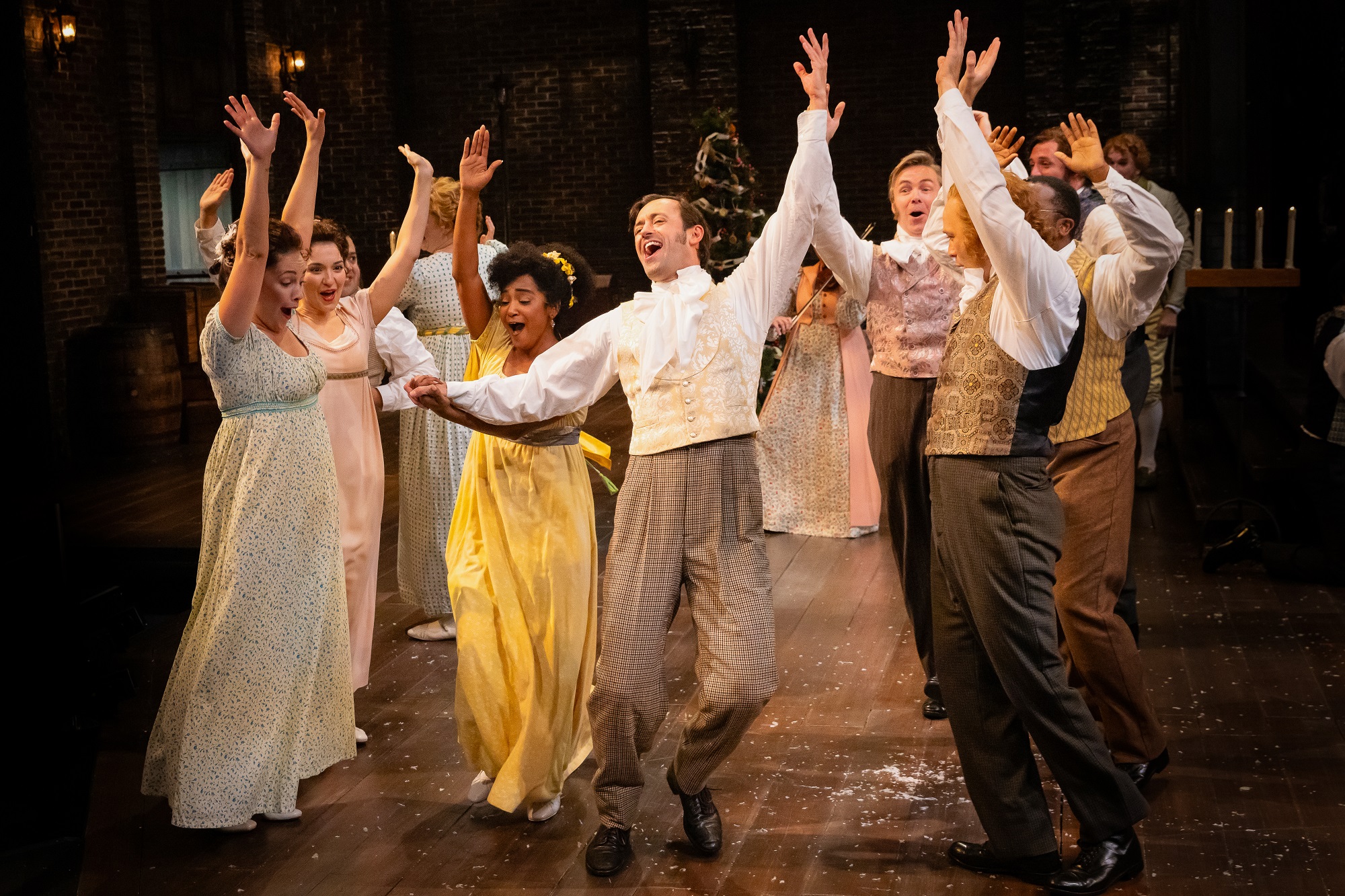
The costumes for A Christmas Carol took shape over several years, through the imagination and skill of a large team of collaborators. Rob Melrose’s new adaptation gave us an opportunity to approach this beloved story with fresh eyes and a spirit of play. We wanted to create a world of delight and magic, while not shying away from the complexities that make Dickens’s tale so relevant today.
I grew up in Brazil, where Christmas falls in the hottest season. Colorful pageants, dancing, and music bring our many cultural and religious traditions into the streets. Yet the celebrations can also make the distance between abundance and need especially visible. As I researched Dickens’s world and considered what this story means to so many people, I was drawn to its moments of joy and community. I wanted the costumes to convey each character’s dignity and humanity while transporting the audience to another time and place.
Selecting fabrics was my favorite part of the process. Saffron, turmeric, chocolate, pistachio, coffee, caramel, cinnamon, paprika: in my imagination, these are flavors as much as colors. Together, they suggest the warmth and pleasure of a shared feast. We often picture nineteenth-century England in dark wool and top hats, but Victorian dress could be exuberantly colorful, with combinations of pattern and hue that still look daring today. Expanding trade and advances in textile manufacturing shaped this visual richness and London was a trading hub for spices, tea, and fabrics.
The Alley’s costume shop gathered fabric and trim samples from across the United States and England. For months we worked through tweedy wools, luminous silk dupionis, and soft cotton voiles, finding the textures and combinations that would give each character a distinct presence. Costume design asks you to move continually between scales: from the choice of a button to the full arc of a character, from the feel of a fabric to its appearance in light and motion. Every piece tells the story alongside the scenery, lights, and sound. An audience may never notice a particular seam or fastening, but I hope the care invested in those details makes the world onstage feel whole—somewhere they can enter and may want to stay for a while.