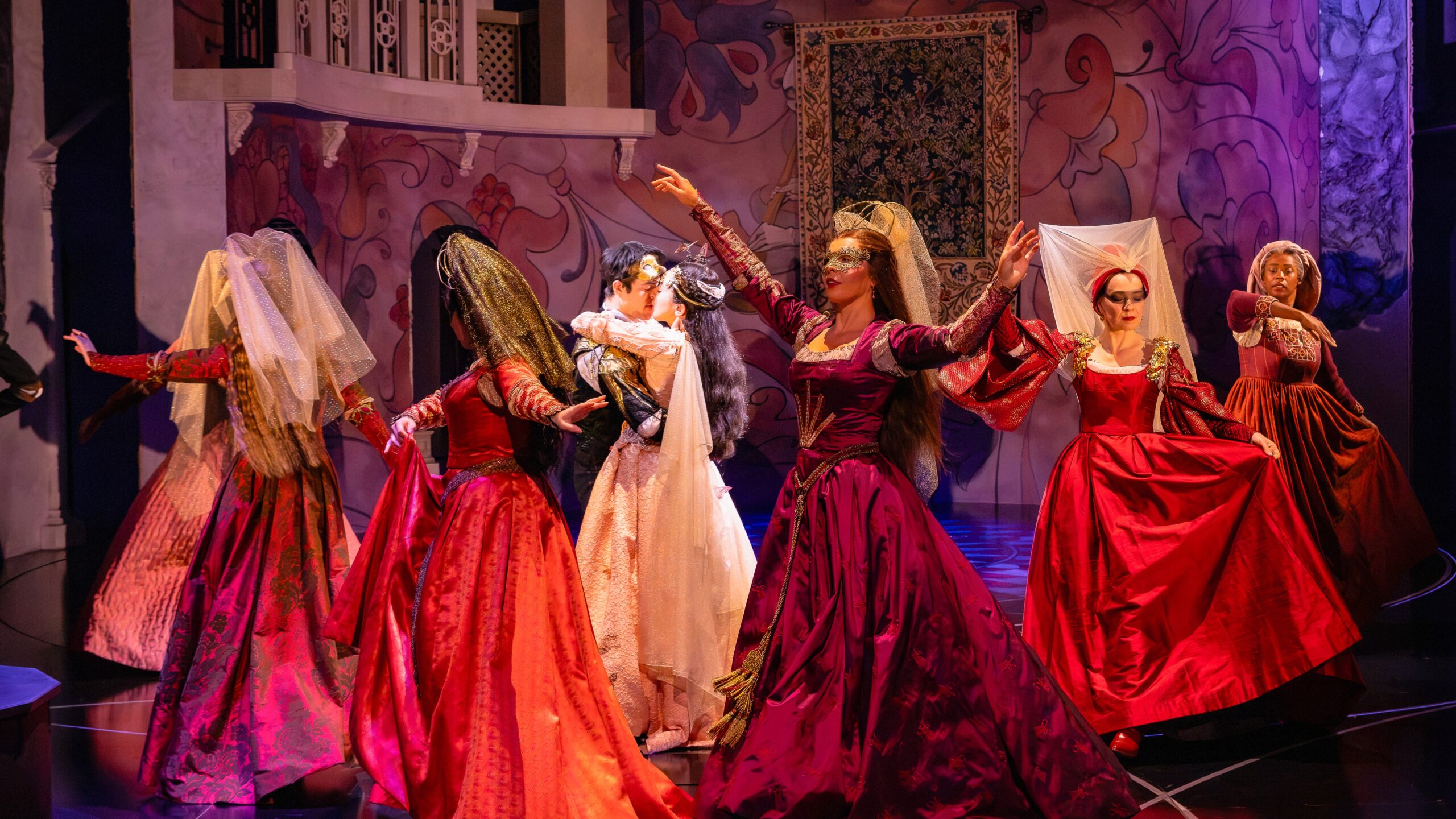
“Comedy” might not be the first word that comes to mind when describing Shakespeare’s Romeo and Juliet. The iconic love story is, after all, one of our great cultural touchstones for doomed romance: feuding families, star-crossed lovers, poison and daggers and fatal misunderstandings. It is a tragedy under both the popular definition (it’s sad) and the Shakespearean shorthand we all learned in high school English class (it ends in death rather than marriage). However, the first half of Romeo and Juliet shares surprising structural similarities with Shakespearean comedies like Twelfth Night and Much Ado About Nothing—and with a form that predates the Bard’s career. By drawing on the Italian theatrical tradition of commedia dell’arte, Shakespeare expertly misdirects his audience. Romeo and Juliet initially appears to be a lighthearted romp: teenagers fall in love, defy their stubborn parents with the help of crafty servants and friends, and seem poised to expose the senselessness of their families’ rivalry. The play’s eventual tragedy lands so hard because we are primed to expect a happy ending.
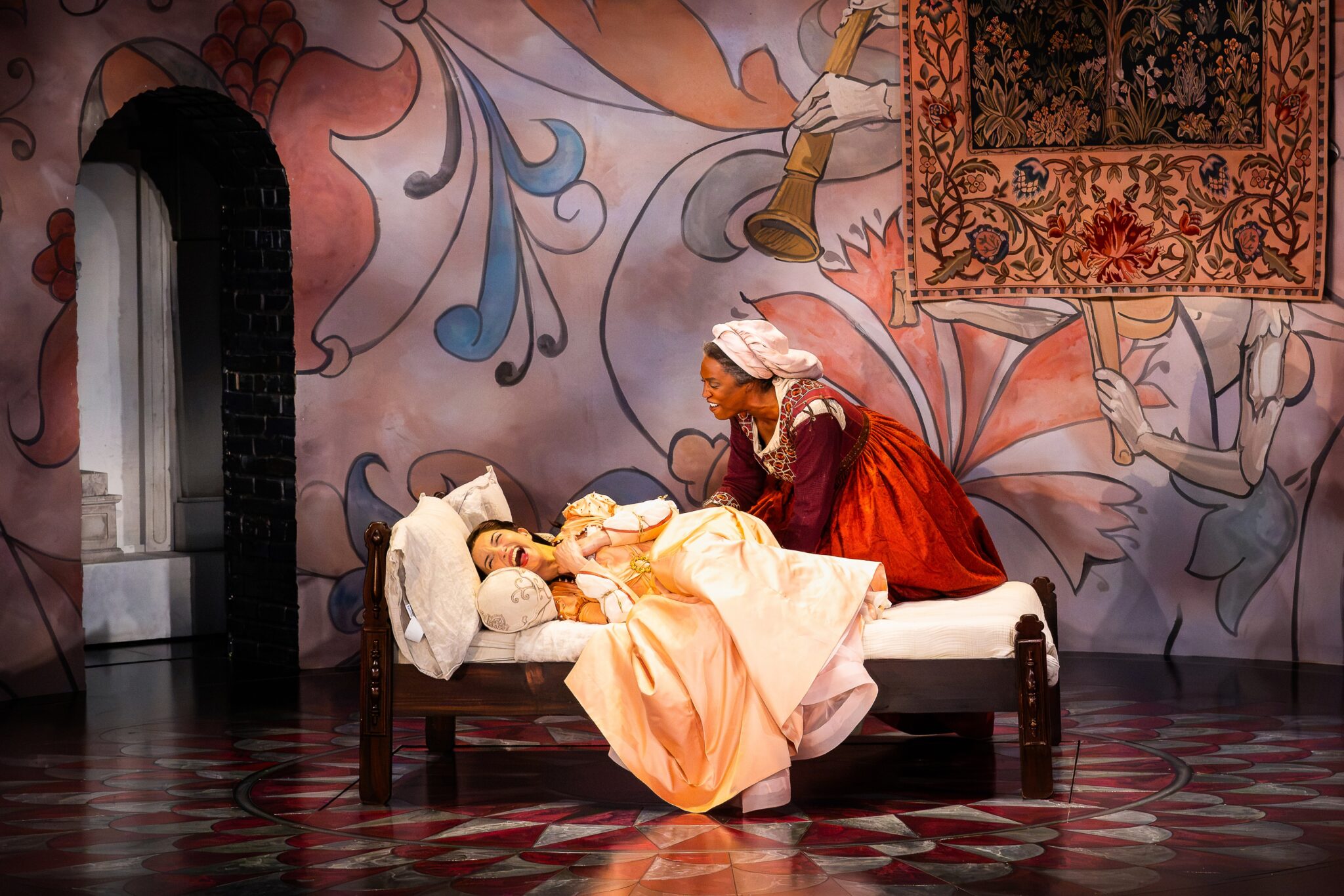
Commedia dell’arte is a style of improvised theater based on a set of stock characters: naive young lovers (innamorati), the self-serious older relatives keeping them apart (vecchi), and clownish servants who serve as go-betweens (zanni). Initially, many characters in Shakespeare’s Verona seem to correspond to these archetypes. In the brawl that opens the play, servants Sampson and Gregory recall zanni with their witty repartee and comic cowardice. When the Capulet and Montague patriarchs rush into the fray, they forget their own age and frailty like the famous commedia vecchio Pantalone. Aggressive Tybalt shares traits with Il Capitano, the braggadocious soldier; Mercutio’s witty commentary suggests that of the trickster Arlecchino. Romeo and Juliet themselves, of course, are the innamorati: young and naive, in love with love and poetry as well as each other. Too busy professing their feelings in iambic pentameter to make practical plans, they must rely on Juliet’s Nurse and Friar Lawrence—filling zanni-like roles—to facilitate their union.
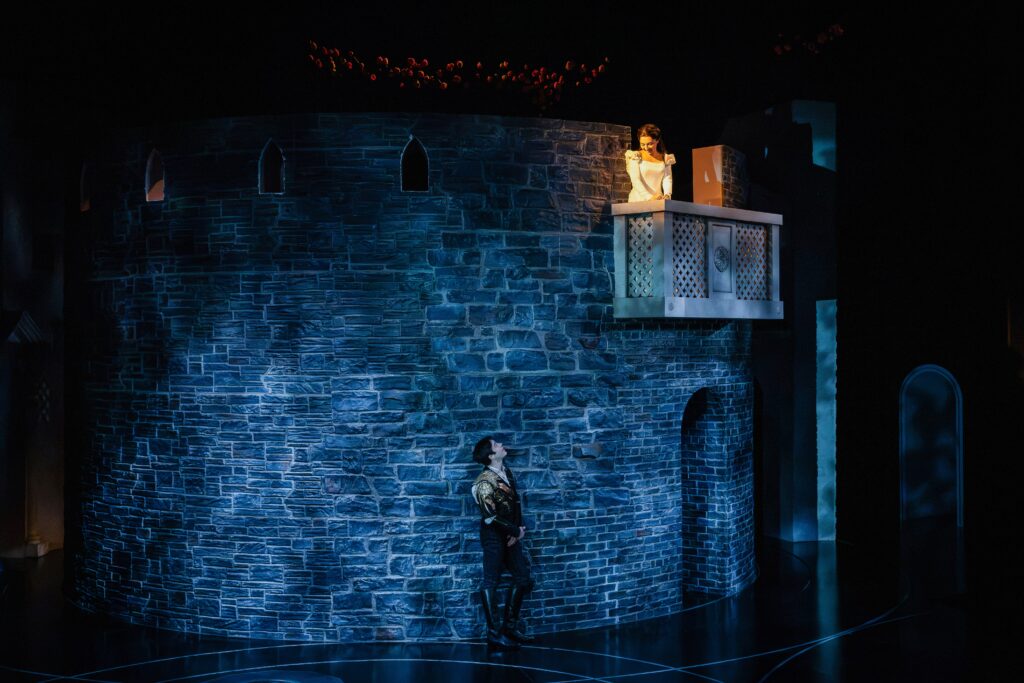
But as the play goes on, Shakespeare complicates these archetypal characterizations. The vecchi of Romeo and Juliet are not merely bumbling fools: the Montagues are emotionally neglectful, and the Capulets are ruthless social climbers who cruelly disregard their daughter’s needs. Tybalt is capable of real violence as well as bluster; when he kills Mercutio, the lighthearted atmosphere of the first two acts dies too. Although Romeo initially appears as a commedia-esque pastiche of the Petrarchan lover, Shakespeare’s language deepens the stakes of his relationship with Juliet far beyond satire. From their meet-cute sonnet to the famous balcony scene to their final lamentations in the crypt, Romeo and Juliet love with a youthful pathos that makes their untimely end genuinely disquieting.
While commedia characters rarely see long-term consequences for their foolish actions, the Romeo and Juliet‘s characters must reckon with the horrors that stem from stubborn hatred and youthful impulsivity. Toward the end of Carlo Goldoni’s commedia play The Servant of Two Masters (produced at the Alley in 2023), a series of misunderstandings convinces each of the romantic leads that the other is dead. They rush outside at the same time, ready to commit suicide—only to have a joyful reunion in the street. Romeo and Juliet offers a similar setup. Friar Lawrence’s escape plan for the young lovers is convoluted enough to rival commedia; Romeo and Juliet are as reckless and dramatic as any innamorati. But because generational violence has become so extreme by Act 5, Shakespeare’s play leaves no room for a last-minute reversal of fortune. What could conceivably have been a comedy of errors takes an irrevocable turn into tragedy.