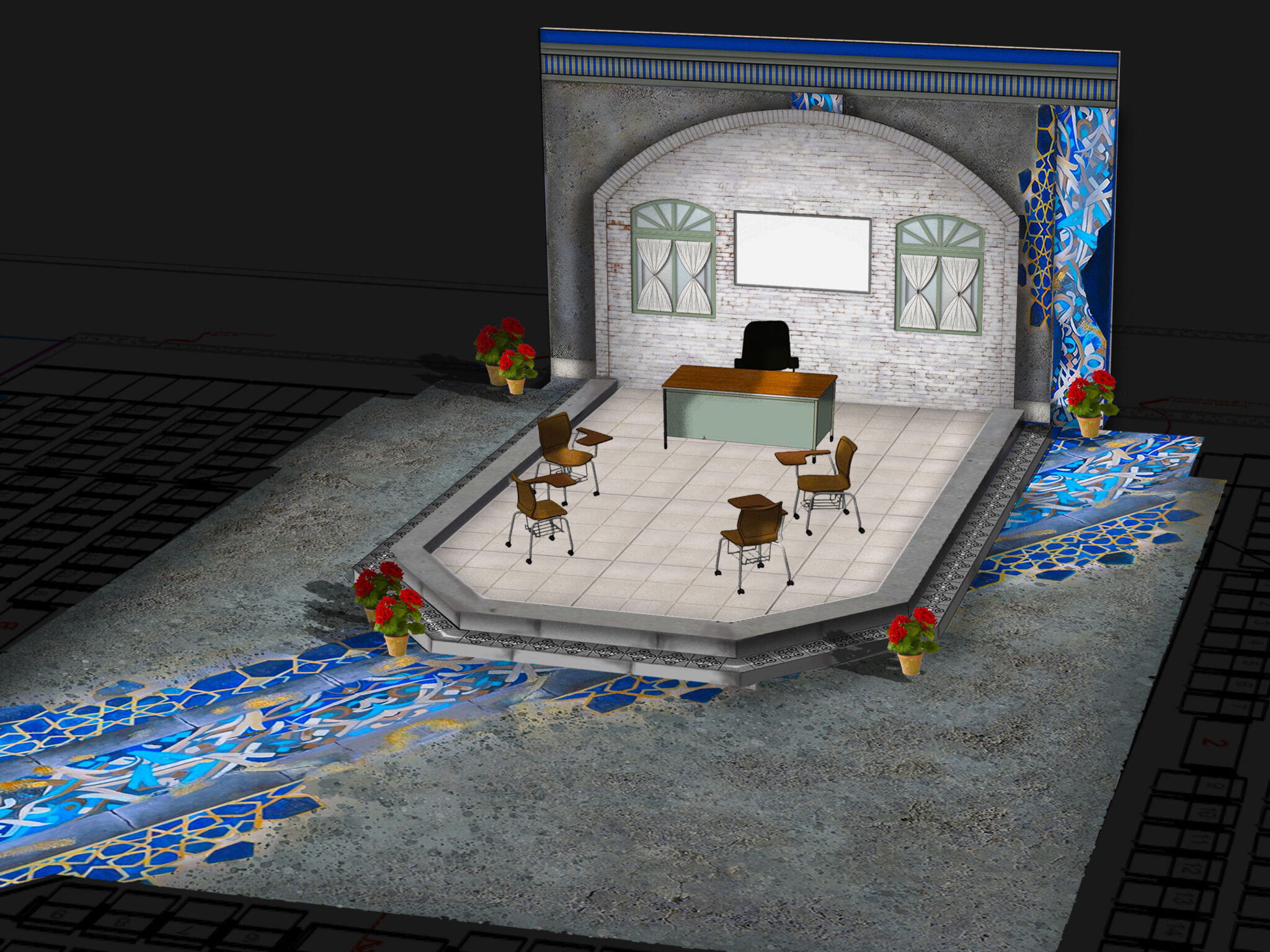
Sanaz Toossi’s Pulitzer Prize-winning play, English, follows the story of four Iranian students and their teacher, as they prepare for the Test of English as a Foreign Language. On the surface, it is a story about identity and culture, and the way that language informs (or disrupts) the way a person moves through the world. In that sense, it’s a narrative that extends beyond a specifically Iranian context, which can be applied to the lives of anyone living among people who don’t share their native tongue. The universality of the play’s message is, in part, what has led to its overwhelming success, with productions across the US in NYC, Chicago, LA, Atlanta, Minneapolis, DC, San Diego, and more.
But this universal story is situated in a highly specific historical moment which, although completely unspoken in the text of English, will be immediately recognizable to an Iranian audience. The play is a period piece, which takes place across six weeks in 2008. Though the play makes no specific reference to Iranian politics, this period represents a turning point in Iranian public life: the Green Revolution.
The Green Revolution (also called the Green Movement) was a social and political protest movement in Iran, which arose largely in response to the reelection of president Mahmoud Ahmedinejad. Though he was the incumbent candidate, many Iranians (especially young people) were inspired and excited by the campaign of reformist candidate Mir-Hossein Mousavi, who represented a greater emphasis on social justice, equality, and self-expression (along with a range of other domestic and foreign policies, which balanced some conservative policies with a social liberalism). When the official election results were declared (in which Ahmedinejad was purported to have won by a landslide) many Iranians questioned the legitimacy of the election.
In response, protests broke out across Iran, with crowds reaching the hundreds-of-thousands (by some reports, millions) in Tehran alone. Protestors adopted the color green as a symbol of this new movement, inspired by the color of Mousavi’s campaign. Thus was the Green Revolution born, as a symbolic gesture of hope and solidarity in the face of the Iranian regime.
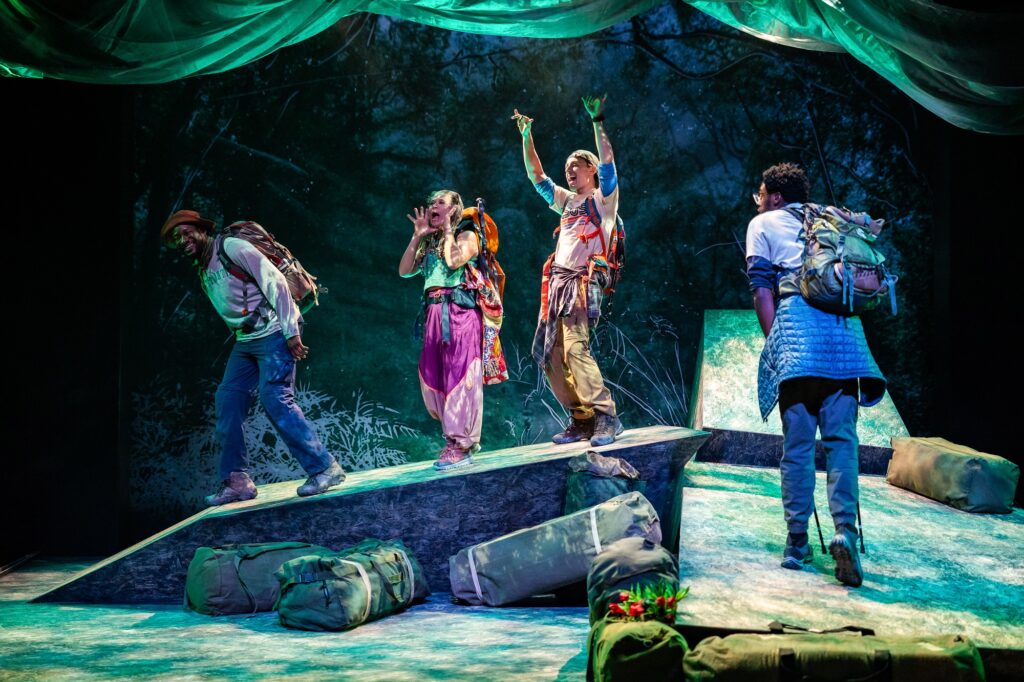
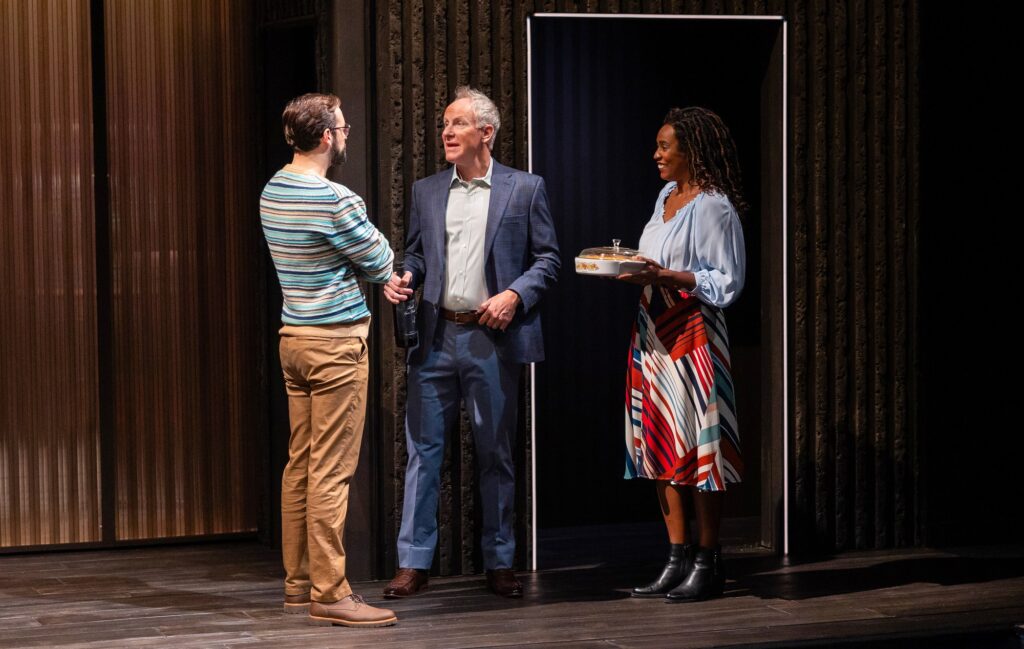
Though the political story underpinning the lives of the characters in English is very subtle, it is represented in the Alley’s production through the intentional use of green in the costume design, which becomes more prevalent as the story progresses. The younger characters, Goli and Elham, can be seen quietly expressing their support for the movement, though their politics are never voiced in the classroom. This, in a sense, reflects the major themes of English: self expression, and the different ways that we communicate our identities–even within the sometimes restrictive confines of language, place, or culture.
Though the Green Revolution was, in one sense, unsuccessful (in that Ahmedinejad remained in power), it laid the groundwork for the citizen-led political movements that continue in Iran today. It is reflected in the Woman, Life, Freedom Movement of 2022, as well as in the continued protests occurring throughout the country, even as we rehearse this production of English.