Scenic Designer’s Reflections on English

I have always been drawn to the old architecture of Tehran, especially how it blends with calligraphy and mosaic work throughout the city.

by

Afsaneh Aayani

January 21, 2026

I have always been drawn to the old architecture of Tehran, especially how it blends with calligraphy and mosaic work throughout the city. In Iran, history has woven the old and new together—you can walk past a centuries-old building right next to a modern high-rise. Growing up, I noticed many historic buildings were turned into institutes, cafés, or restaurants. From the outside, they kept their character, but inside, the original textures and details were often painted over or replaced, as if their identity was being erased.

That contrast became the inspiration for my design for English. Each time I design or revisit this play, I discover a new layer. This time, I wanted to explore Iranian culture and architecture in a different way—one that feels like home for those who know it, and introduces its beauty to American audiences. Every color and pattern was chosen carefully in collaboration with my director, Everen and associate designer, Peyton.

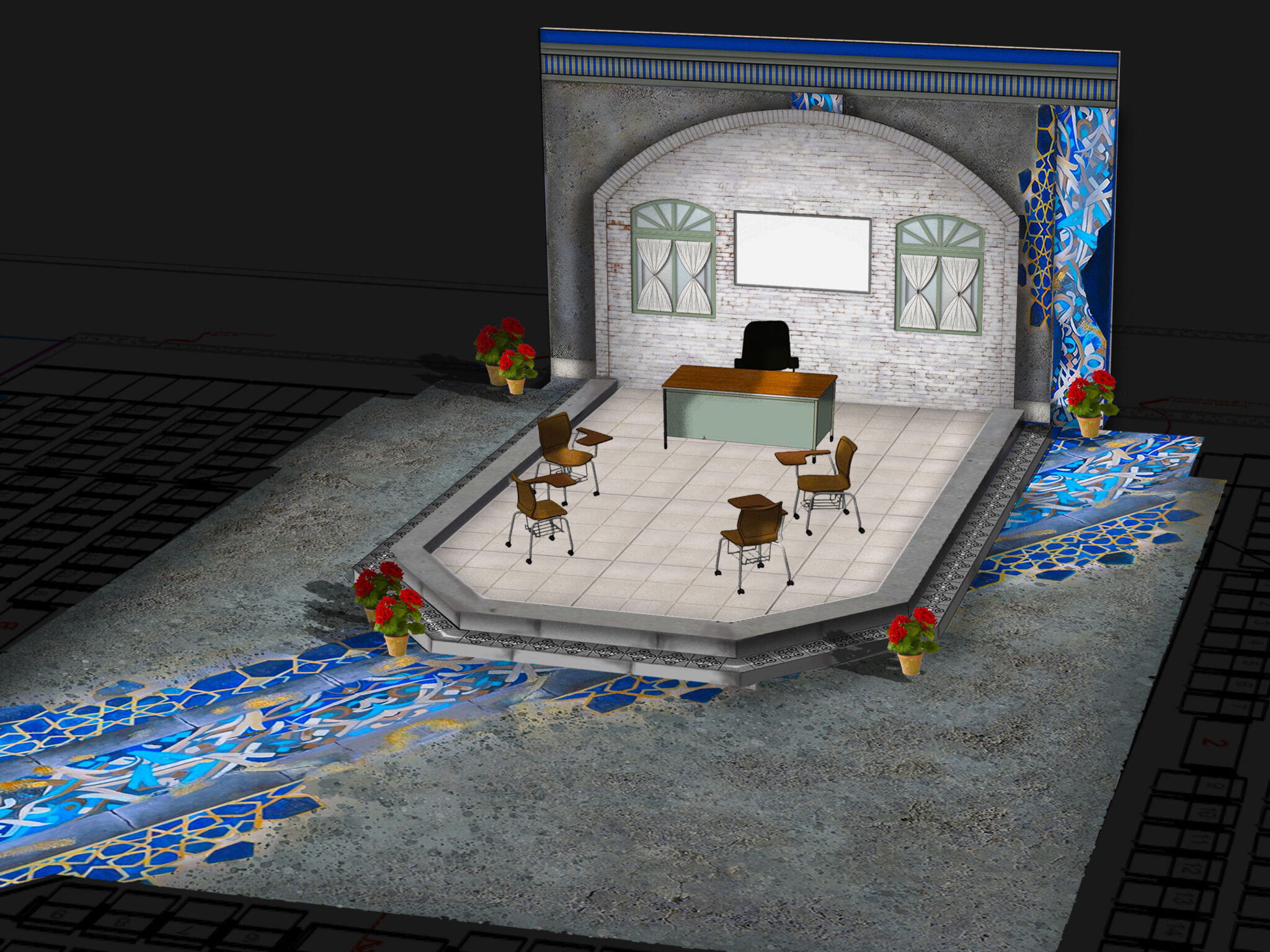
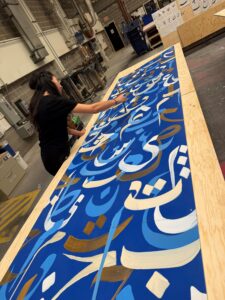
The classroom is shaped like a Persian fountain, a place where people traditionally gathered to cool fruit, share food, and tell stories on summer nights. In the same way, this English class brings together people from different backgrounds, each with their own story. Calligraphy surrounds the space, reminding us that no matter how hard the characters try to speak and think in English, their identity and language are always with them. The classroom walls show old architecture painted over, with brick textures still visible—symbolizing how identity cannot truly be erased, no matter how much one tries to cover it.

Siempre me ha atraído la arquitectura antigua de Teherán, especialmente la manera en que se entrelaza con la caligrafía y el trabajo en mosaico por toda la ciudad. En Irán, la historia ha tejido lo antiguo y lo nuevo: puedes pasar caminando junto a un edificio de siglos de antigüedad justo al lado de un rascacielos moderno. Al crecer, noté que muchos edificios históricos se transformaban en institutos, cafés o restaurantes. Por fuera conservaban su carácter, pero por dentro las texturas y los detalles originales a menudo eran pintados o reemplazados, como si su identidad estuviera siendo borrada.

Ese contraste se convirtió en la inspiración para el diseño de English. Cada vez que diseño o regreso a esta obra, descubro una nueva capa. Esta vez quise explorar la cultura y la arquitectura iraní desde otro lugar: uno que se sienta como hogar para quienes la conocen y que, al mismo tiempo, presente su belleza al público estadounidense. Cada color y cada patrón fueron elegidos cuidadosamente en colaboración con el director, Everen, y la diseñadora asociada, Peyton.

El salón de clases tiene la forma de una fuente persa, un lugar donde tradicionalmente la gente se reunía para refrescar la fruta, compartir comida y contar historias durante las noches de verano. De la misma manera, esta clase de inglés reúne a personas de distintos orígenes, cada una con su propia historia. La caligrafía rodea el espacio y nos recuerda que, por más que los personajes intenten hablar y pensar en inglés, su identidad y su lengua siempre los acompañan. Las paredes del aula muestran arquitectura antigua cubierta de pintura, con las texturas del ladrillo aún visibles, simbolizando que la identidad no puede borrarse del todo, por más que se intente cubrirla.

On Sale Now

May 29 - June 28, 2026

Misery

He’s Her Obsession, She’s His Nightmare

July 24 – August 30, 2026

The Girl on the Train

A Woman’s Memory, Her Greatest Betrayal

Explore More
Artistic Director’s Reflections on The Girl on the Train

BY Rob Melrose

Sound as Witness: In conversation with Servanté Cook on Music, Community, and the Sounds of August Wilson’s Fences

BY Russell Boyd

Dear Alien and the Cosmic Theatre of Advice

BY Makaylee Secrest

Alley Theatre Artists’ Received 16 Tony Nominations

BY Caroline Austin

Lights, Camera, Alley!, Alley Theatre Ball

BY Caroline Austin

August Wilson’s Four B’s: The Art that inspired The American Century Cycle 

BY Bradley Michalakis