Written by: Russell Boyd, Alley Theatre, Interviewing Servanté Cook of Oqupi Houston
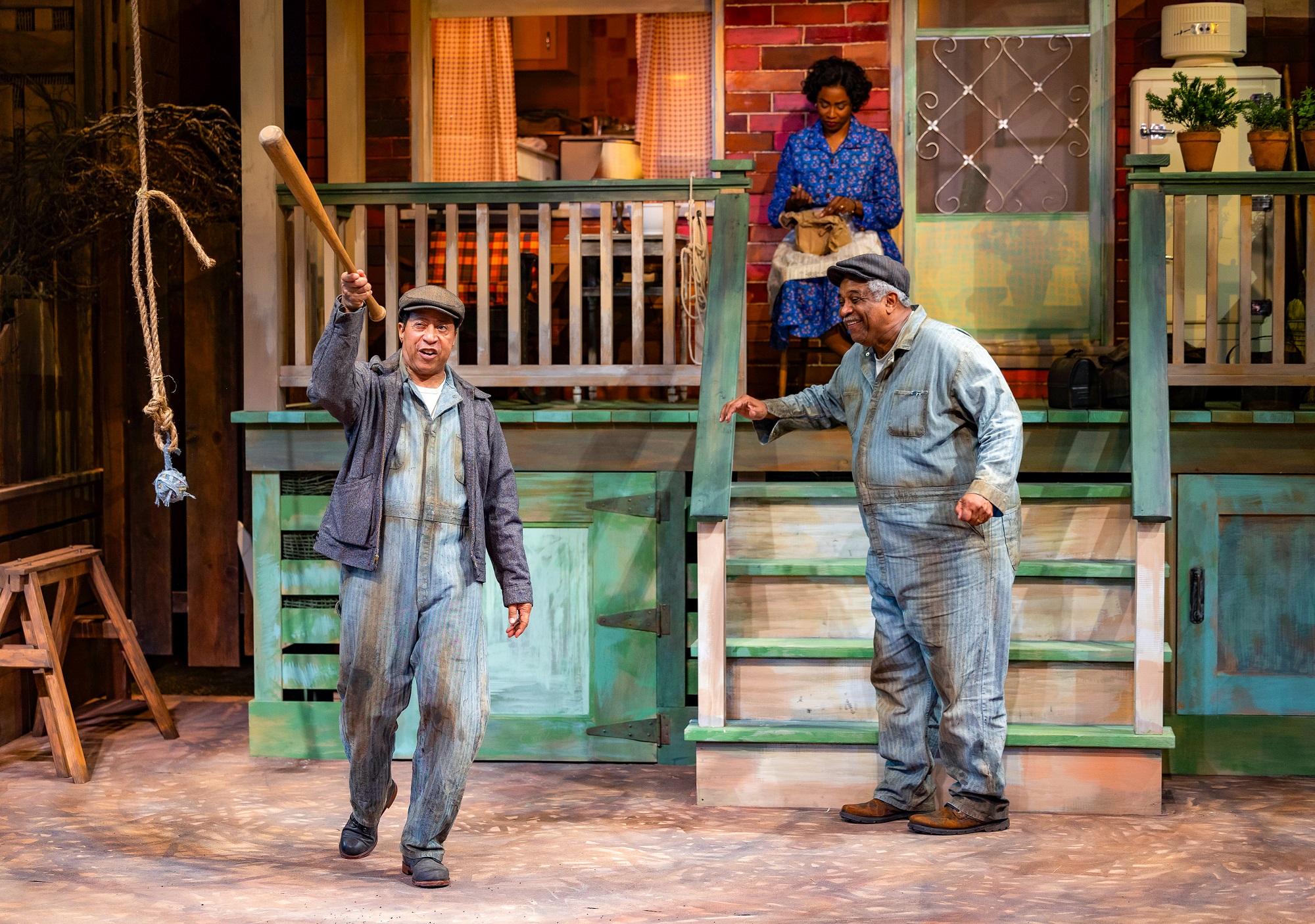
Alley Theatre’s production of Fences under the direction of Eileen J. Morris which wrapped on Sunday, May 10, invited Houstonians into the world of one of August Wilson’s most celebrated works. Although the production only ran for three weeks, our engagement with Wilson, Fences, and his American Century Cycle stretches far beyond the stage and dates to as early as 1990, when Fences first blessed an Alley Theatre stage.
As we engaged our community around Fences, our vision extended beyond the production itself. Part of that work included Bearing Witness: August Wilson in Houston, a public archival exhibition exploring Wilson’s enduring connection to Houston through theatre, community storytelling, and cultural memory. We also wanted to explore the sonic world of Fences through the sounds of Houston, a city whose cultural identity has long been shaped by Black music, rhythm, and storytelling.
In celebration of that connection, Alley Theatre and Oqupi Houston collaborated on What Love Carries, a curated listening experience moving through blues, jazz, soul, gospel, and hip hop to explore generations of Black life and the ways love is carried through sacrifice, memory, survival, and unspoken truths.
I sat down with Servanté Cook, founder of Oqupi Houston and curator of the listening experience, to talk about the project, Houston’s creative ecosystem, and why Black music has always been part of how we tell stories.
RUSSELL:
Thanks for joining me, Servanté. Before we get into the music, I want to start with you. Who is Servanté Cook in your own words, beyond titles and roles?
SERVANTÉ:
I’m a natural connector and lover of the arts. I’m someone that’s passionate about community building and spaces that welcome change and diversity.
RUSSELL:
You can definitely feel that in your work, especially through Oqupi Houston. For people who may not know, what exactly is Oqupi Houston?
SERVANTÉ:
Oqupi Houston is a Houston-based creative collective focused on building an ecosystem for Black and Brown creatives, entrepreneurs, artists, content creators, marketers, designers, cultural builders, and creative professionals. We provide resources and connections through events, networking opportunities, partnerships, and exposure. Our mission is to create an ecosystem that’s both elevated and inclusive.
RUSSELL:
And y’all have truly built something special. I’ve attended several Oqupi experiences over the past year, and there’s always a real sense of intentionality and genuine connection in the room. How did Oqupi get started?
SERVANTÉ:
Honestly, becoming a community organizer and founder of a creative collective wasn’t exactly something I always planned to do, but as a multidisciplinary creative myself, I saw a real need for community in Houston. There were times where I felt isolated creatively. I knew a lot of talented people, but there wasn’t really a central space for us to connect, collaborate, and build something sustainable together.
One day, I invited about twelve creatives over to my house just to talk about the idea of creating our own collective. That conversation happened almost five years ago, and it became the seed for Oqupi Houston.
RUSSELL:
That’s incredible, especially seeing how much Oqupi has grown since then. Between events, mixers, The LinkUp, digital content, panels, and partnerships, you can really see the social impact of the work.
SERVANTÉ:
I definitely see what we do as social impact work. The experiences are great, but the relationship-building aspect is just as important. A major part of Oqupi’s work is helping create relationships that lead to real creative outcomes.
I’m grateful that Oqupi has helped people become collaborators, mentors, accountability partners, and lifelong creative friends. We’ve also been able to help bridge gaps between creatives, community spaces, and institutions.
RUSSELL:
Absolutely. I still remember first connecting with Oqupi at one of the creative coworking days at Kefita Coffee back in February 2025. I was able to connect with so many creatives and movers and shakers, and honestly, get more plugged into the local work happening in the community.
Since then, our organizations have continued supporting each other’s work. Oqupi’s leaders have joined Alley Theatre’s Karamu Advisory Board, y’all have connected community members to productions and programming, and in many cases introduced people to theatre for the very first time, and now, that relationship building has culminated in us collaborating on the What Loves Carries listening experience. Quite a full circle moment! What has this collaboration meant for you?
SERVANTÉ:
For me, collaborations like this create more opportunities for people to connect with art in ways that feel familiar and accessible. Everybody may not enter through the same door, but music is something most people already carry with them emotionally.
When you can use that as a bridge into storytelling, culture, and art, it creates a deeper experience and a stronger sense of belonging.
In many ways, this collaboration reflects what both Oqupi Houston and Alley Theatre are exploring through community-centered programming: culture becomes most powerful when people can see, hear, and recognize themselves inside of it.
RUSSELL:
Agreed! So many of us make sense of the world and our shared experiences through music. What was your earliest memory of connecting with music personally?
SERVANTÉ:
When I was younger, I vividly remember taking long drives with my mother and watching her sing her heart out to artists like Mary J. Blige, Anita Baker, and even Biggie Smalls. At the time, I didn’t fully understand everything she was navigating as a young parent, but I could tell music moved her powerfully.
It felt like more than entertainment. Sometimes it was an escape, and other times it was a way for her to process what she was feeling. Watching that showed me early on how deeply music can connect to people’s emotions and personal experiences.
RUSSELL:
I love that! You can really feel that emotional connection throughout What Love Carries. You have a strong ear for music and have curated many playlists and sound experiences. When you curate a playlist, what’s your starting point? Are you building a mood, a story, or a journey?
SERVANTÉ:
For me, creating a playlist always starts with one question: “How do I want to feel?” So it’s rooted in mood first.
I build playlists for specific moments, and every song plays a role in shaping that feeling. I’m intentional about the flow because even one song can completely shift the vibe. It’s less about telling a linear story and more about creating a consistent emotional experience from beginning to end.
Listening straight through feels less like streaming songs and more like moving through generations of Black interior life. We hear love, grief, tenderness, faith, survival, and longing all existing together.
RUSSELL:
One thing I found fascinating was how naturally the listening experience moves between blues, jazz, soul, gospel, and hip hop without ever feeling disconnected. How did you approach blending those genres together?
SERVANTÉ:
Everything was intentional. My approach was to keep it cohesive and approachable. Blues and jazz can feel dense over a long listen, so I focused on the emotional throughlines within Fences and paired them with modern hip hop carrying similar themes.
Instead of separating genres, I treated them as one ongoing conversation between generation and genre. Muddy Waters bleeds into Bill Withers. Mahalia Jackson speaks to Solange. Kendrick Lamar sits beside Big Mama Thornton without feeling disconnected.
RUSSELL:
That idea of “an ongoing conversation across generations” feels very August Wilson coded to me. What was your process when you first approached sounds for Fences specifically?
SERVANTÉ:
My process started with research. I rewatched Fences because I needed to reconnect with the characters and really sit in their world. From there, I focused on what each of the characters were feeling but not saying and translated that into sound through tone, tempo, and texture.
For example, “Grandma’s Hands” by Bill Withers speaks to the quiet strength and healing presence of Black women, which is deeply aligned with Rose’s character.
RUSSELL:
And you can absolutely feel that while listening. It creates a much deeper emotional experience beyond what audiences are seeing on stage. Even hearing Kathy Ruvuna’s sound design during the production of Fences and the blues and jazz textures throughout the pre-show experience helps pull audiences into 1950s Pittsburgh and the feelings the characters are carrying.
SERVANTÉ:
Exactly. It opens the door for accessibility and connection to the arts, especially theatre, in ways that don’t always exist for people
RUSSELL:
Agreed. It’s like what happens when an institution produces a show written by a Black playwright, centered on a Black story, with Black characters, played by Black actors, and directed by a Black director. It creates that unspoken feeling of being seen. That feeling of, “My people are in here.” Fences definitely felt like that for me and What Love Carries feels similar. Hearing those sounds unlocked some deep core memories. Like the smell of the BBQ pit smoking in granny’s house. The softness that comes with sitting on a church pew, the sound so Sopranos singing songs of praise. Even the not so good feelings, like that unavoidable Black child speech that underscores so many of our upbringings: “You have to be twice as good as them to get half of what they have.” The experience becomes less about individual songs and more about cultural memories that so many of us share.
SERVANTÉ:
Exactly. Blues, jazz, and hip hop all come from Black people processing life in real time, turning joy, pain, and survival into expression. What you hear in the blues carries into jazz and wakes up again in hip hop. It’s one continuous conversation about Black life across generations, just told through different sounds.
RUSSELL:
You know, August Wilson was a huge supporter of hip hop. He once said, “To me, hip hop is what I call the spiritual fist of the culture. That’s proof that the culture’s strong, robust, inventive.”
I’ve always loved that quote because it speaks to music as ancestral lineage, the passing of truth, memory, and survival through sound, especially sounds native to Houston. We have one of the most distinct musical identities in the country. Chopped and screwed music, zydeco, gospel, dirty south rap, it all lives in the DNA of the city and the stories that make Houston special!
SERVANTÉ:
Absolutely. I’m originally from Chicago, but after living in Houston for quite some time, I’ve really grown to appreciate Houston’s Black music culture and its role in defining the city and telling the experiences of generations of Houstonians.
RUSSELL:
Last two questions. First, where can people experience What Love Carries? And second, if you had to imagine three songs that would’ve been in August Wilson’s personal rotation, what are you choosing?
SERVANTÉ:
The playlist is available on Spotify, and visitors can also scan the QR code inside the exhibition gallery space to listen at Spotify Playlist.. As for the songs:
- Al Green — “Let’s Stay Together”
- B.B. King — “Everyday I Have the Blues”
- Aretha Franklin — “Do Right Woman, Do Right Man”
RUSSELL:
Those are definitely August Wilson records right there. I appreciate you sitting down with me and talking about this experience. It’s been a collaboration we’ve genuinely enjoyed building together, and I’m excited for what comes next.
SERVANTÉ:
Likewise! Thank you for the opportunity. I hope people enjoy the experience as much as I enjoyed putting it together.
Bearing Witness: August Wilson in Houston is on view at Alley Theatre through Sunday, May 24, and is open to the public whenever the lobby and house are open for performances. Visitors can scan the QR code in the gallery or listen to What Love Carries at Spotify Playlist. For individual or group tours, contact Russell Boyd at russellb@alleytheatre.org.