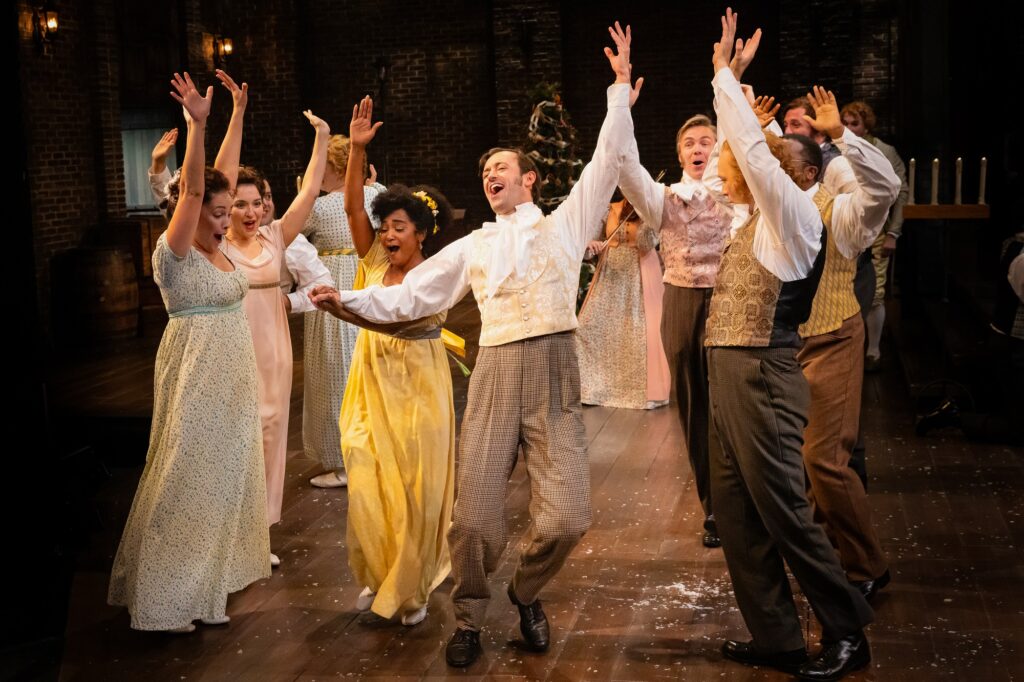

Victorian England was, more than anything, a world of manners. From cutlery use to small talk, every act and behavior was regulated and scrutinized according to strict codes of etiquette. Some of the rules will sound familiar today: men were expected to walk women home at night, and women were expected, for example, to defend their friends when others spoke poorly of them. But a great many social expectations of this upper class society also ventured into the absurd. In his Manual of Social and Business Forms, for example, Thomas E. Hill listed etiquette guidelines as outlandish as “Anyone with bright red hair and a florid complexion should marry someone with jet black hair.”
These dandy Victorians are the subject of Oscar Wilde’s well known 1895 comedy The Importance of Being Earnest, and their ridiculous manners and self-centered ways hardly stand a chance against Wilde’s insatiable wit.
His critique of the aristocracy begins at the very start of the show. We open on Algernon playing the piano, and when he asks his butler Lane if he heard the music, Lane says, “I didn’t think it polite to listen, sir.” Already our protagonist runs a household of ridiculous expectations: his butler thinks it unbecoming to listen to music Algernon plays in the next room, music he (and the audience) can most certainly hear.
These excessive manners Algernon imposes on his household are rooted in his privilege and self-interest as a member of the aristocracy. He complains about servants drinking his wine, for example, and speaks rudely to people of the lower classes, at one point saying outright, “I don’t know that I am much interested in your family life, Lane.” Lady Bracknell is even more straightforward about her interest in upholding the power of the aristocracy, saying it is fortunate that “education produces no effect whatsoever” because, she explains, “If it did, it would prove a serious danger to the upper classes.”
Algernon and Jack take this self-centeredness to the extreme when they do what Algernon calls ‘Bunburying,’ in which they lie about their identities or make up fake loved ones they pretend are in need of their assistance to get out of commitments they don’t want to keep. Wilde is quick to put these men in their place for their deceptive behavior. Before long, Algernon and Jack’s Bunburying gets them into all sorts of trouble, and in this way the play presents the Victorian aristocrats as not only deplorable but simply ridiculous.
Even Gwendolen and Cecily have a layer of absurdity to their ways: both women reveal, independently, that they could only ever love a man named Ernest, simply because the name feels reassuring to them. This is the same kind of absurd expectation we’ve seen with Hill’s “Anyone with bright red hair and a florid complexion should marry someone with jet black hair”; it’s borderline arbitrary, rooted in made up expectations and silly superstition.
Wilde’s Victorian aristocracy is a class of privileged, self-centered, and altogether foolish individuals. The question now, of course, is whether or not they’ll ever learn from their mistakes, and for that you’ll have to watch The Importance of Being Earnest.