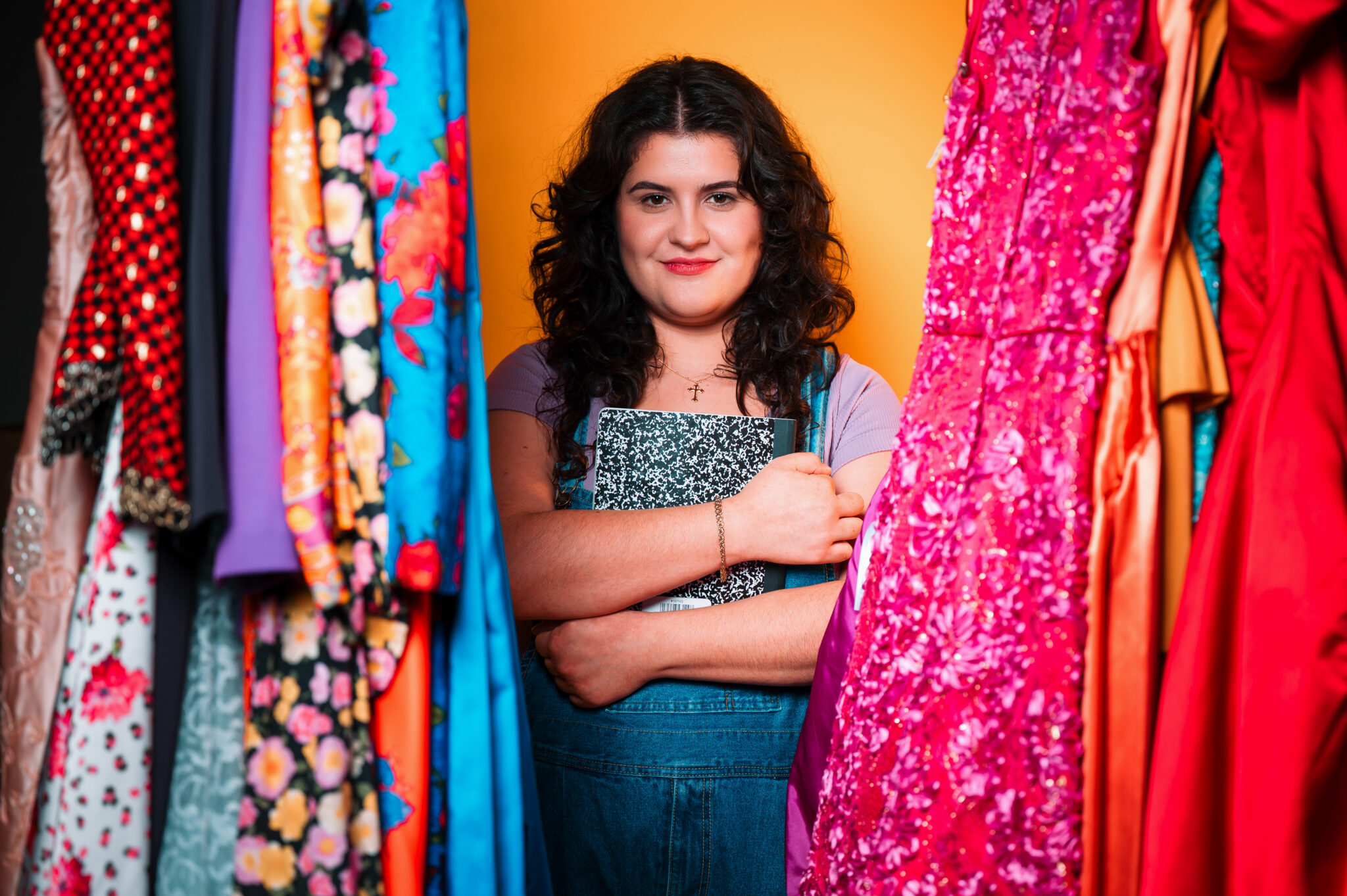
When Real Women Have Curves begins, we’re thrust into a cramped, sweltering sewing factory in East L.A., where five Latina women stitch garments, trade gossip, crack jokes, and share dreams. They work long hours for little pay and face family pressures, body image insecurities, and the constant threat of immigration raids, yet their resilience shines through it all. Playwright Josefina López draws from her own life to weave a story full of humor and heart while shedding light on the exploitation of undocumented workers. Set in 1987, just after the passage of the Immigration Reform and Control Act (IRCA), the play captures the grueling conditions many immigrant women in the Los Angeles garment industry have endured and continue to face today.
Though garment factories existed in L.A. as early as the 1920s, the industry exploded in the 1970s and 1980s. Seeking to cut costs, many apparel companies abandoned unionized factories in the Northeast and Midwest in favor of Southern California, where an influx of immigrant labor, largely from Mexico, Central America, China, and Korea, provided a cheap, non-union workforce. By 1990, more than 100,000 garment workers were employed in L.A. County. The vast majority of them were immigrants, and many were undocumented, which left them especially vulnerable to wage theft and abuse.
A major driver of this exploitation was the piece-rate pay system, where workers were paid per item sewn instead of by the hour. In theory, this rewards productivity. In practice, it forced workers to sew rapidly for hours on end, sometimes earning as little as $2 to $6 an hour, far below California’s minimum wage. Factory owners often operated through a layered chain of contractors and subcontractors, making accountability nearly impossible. Inside, conditions were dire: stifling heat, poor ventilation, exposure to fabric dust and industrial steam, blocked emergency exits, and locked doors during shifts. Ten- to twelve-hour days were routine, often with no overtime pay or proper breaks.
The Immigration Reform and Control Act of 1987 intended to penalize employers who knowingly hired undocumented workers, had the opposite effect. Employers faced little scrutiny, while workers, now even more fearful of raids and deportation, had fewer avenues to report abuse. This fear silenced many and worsened conditions on the factory floor.
Since the play’s premiere in 1990, there has been limited progress in the protection of workers in the garment industry. A 2016 investigation by the U.S. Department of Labor found that 85 percent of 77 randomly selected L.A. garment factories were violating labor laws. The Department noted that such results point to the high underlying rate of noncompliance in the industry, driven by relentless pressure to keep prices low. In 2021, California passed the Garment Worker Protection Act, banning the piece-rate system in most cases and holding both brands and manufacturers jointly responsible for wage theft. It was a hard-fought win for advocacy groups like the Garment Worker Center and a critical step toward restoring dignity to an exploited workforce.
Despite these advances in policy, the problem persists today. In 2022, the U.S. Department of Labor recovered nearly $900,000 in back wages and damages for 296 garment workers in Southern California after investigations revealed widespread wage theft. Some workers had earned as little as $1.58 per hour, and over half of the employers were caught paying wages off the books or falsifying records. Today, more than 45,000 garment workers remain in L.A., the majority of them immigrant women, and many still labor in unsafe, underpaid conditions.
So, what can we do? One step is to resist fast fashion by choosing fewer, higher-quality items from ethical sources. Another is to raise awareness, support labor advocacy groups, and push for stronger enforcement of existing laws.
Real Women Have Curves is not just about self-image or family bonds; it is about labor. It is about what it means to work hard under pressure, to survive when your labor is undervalued and your immigration status puts you at risk, and to find solidarity with others in the same struggle. It reminds us that behind every piece of clothing is a human being, and that their dignity, safety, and rights matter. Real Women Have Curves invites us to laugh, cry, and cheer, but also to act.