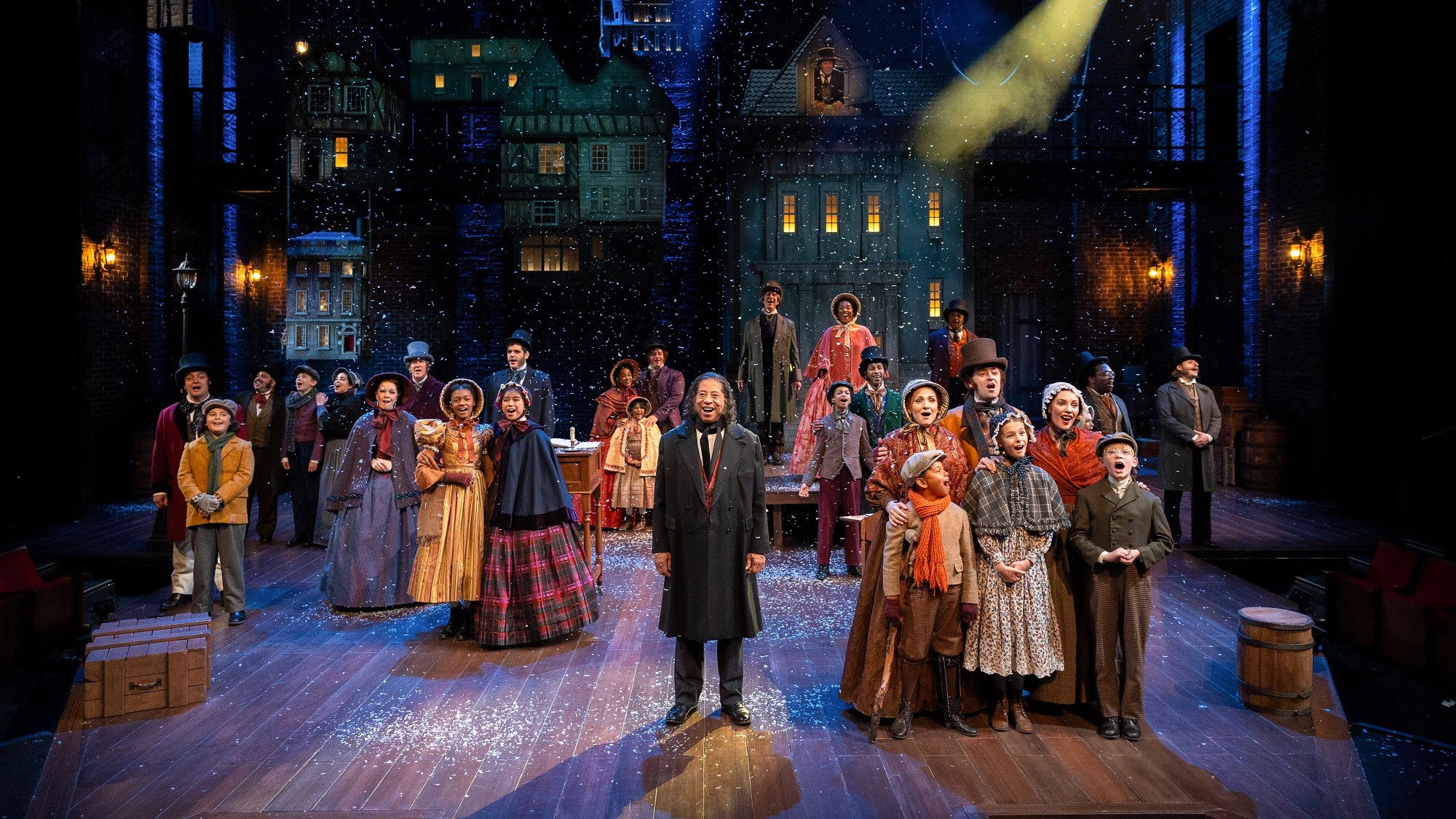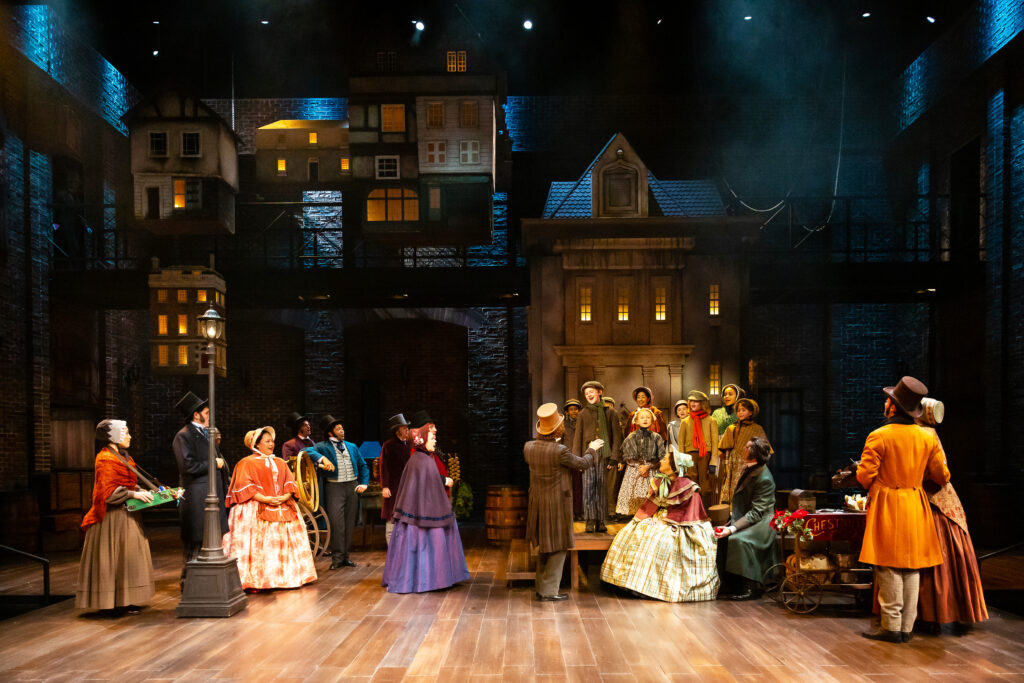
It is easy to forget just how radical A Christmas Carol was upon publication. Today, many view the story as a family holiday staple on par with The Nutcracker: festive and heartwarming, but not necessarily a work of biting social critique. But when Charles Dickens picked up his goose quill in 1843, he was determined to “come down with sledgehammer force” on the uncharitable attitudes of upper-class Londoners. Paging through the novella or attending Dickens’s famous dramatic readings, Victorian audiences recognized references to specific social policies that harmed the working poor.
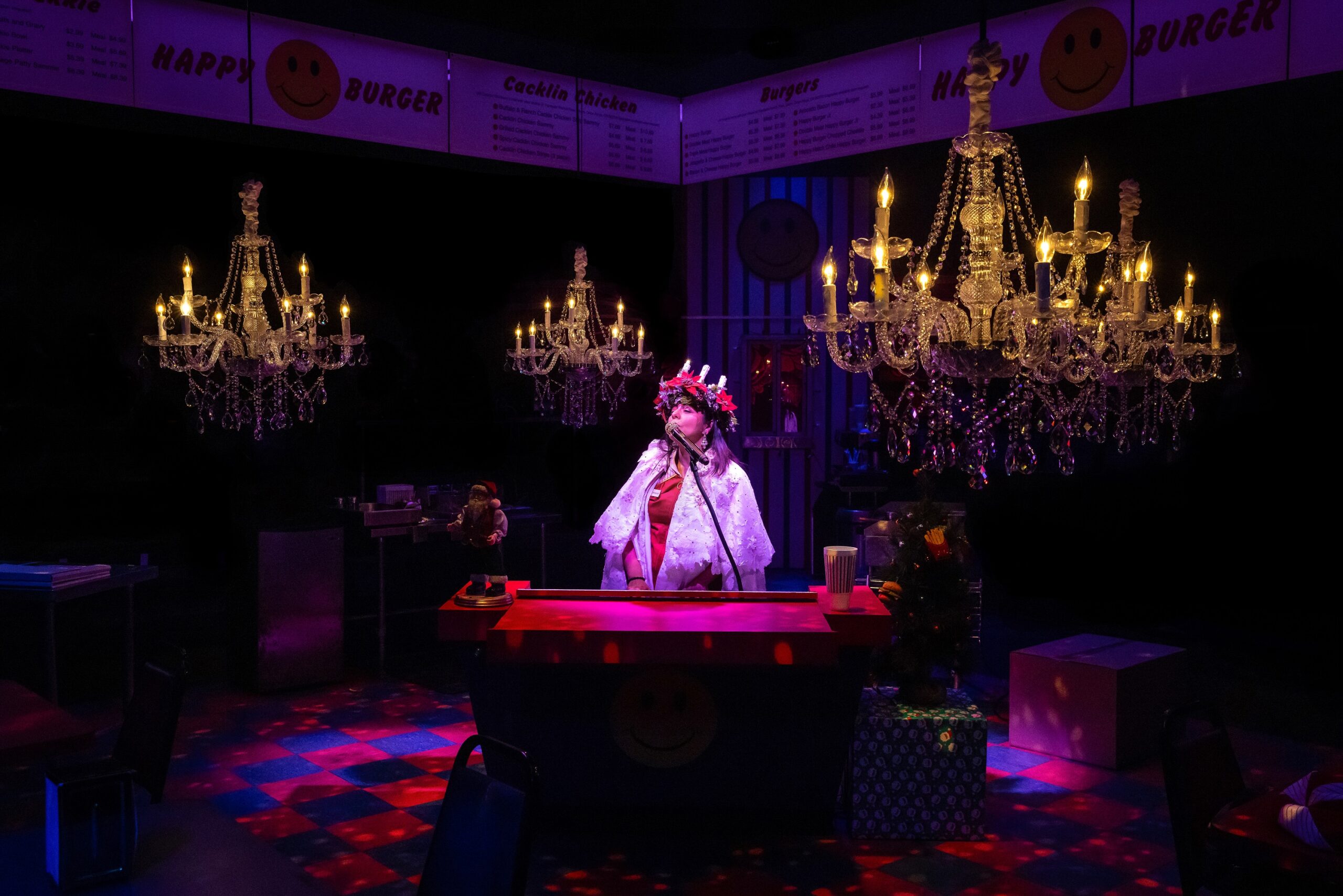
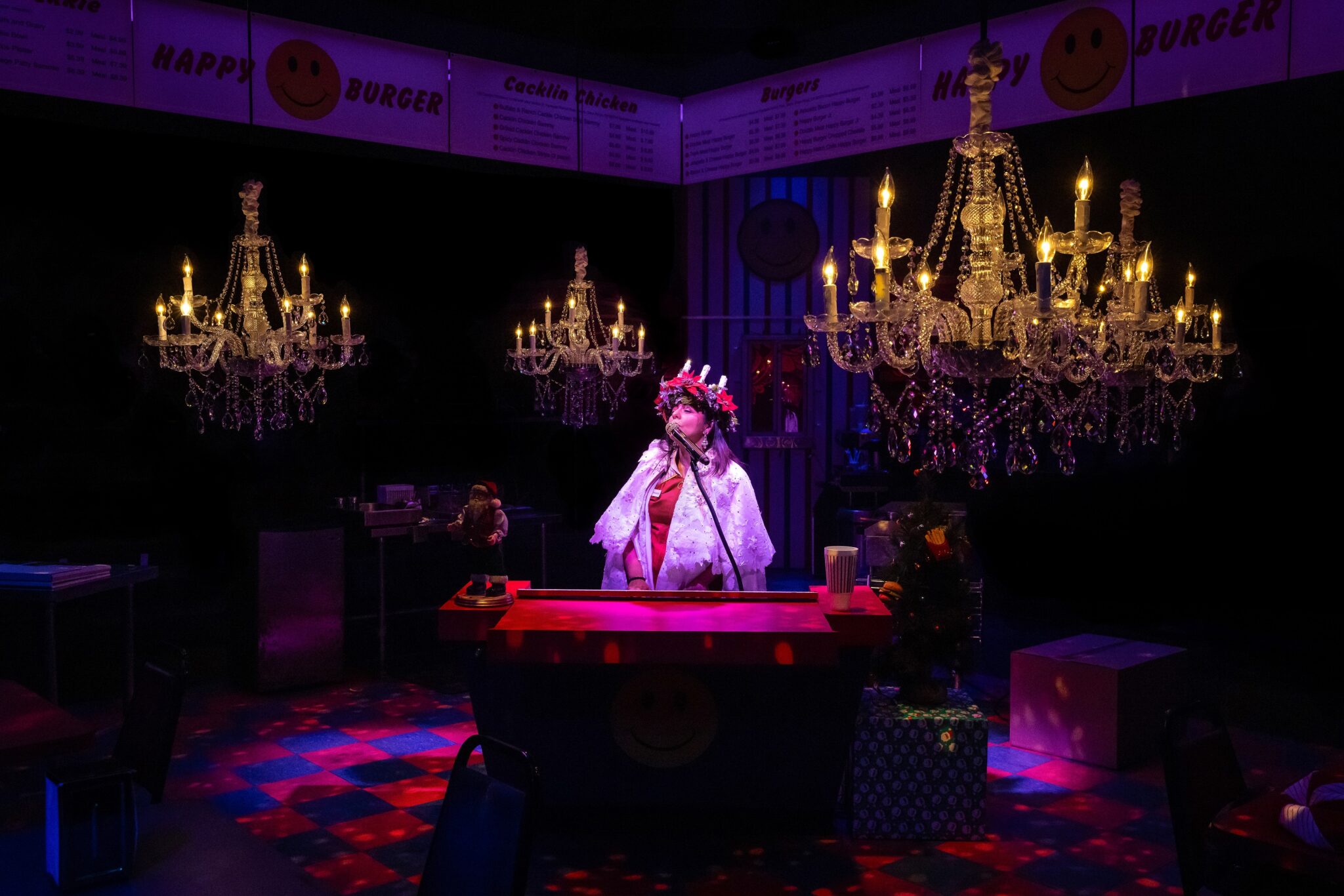
The Night Shift Before Christmas makes Carol just as immediate to twenty-first-century theatergoers. In Night Shift, Isaac Gómez transposes the iconic Dickensian ghost story from Victorian London to modern-day Houston. A Latina fast food worker named Margot stands in for Scrooge; her spectral visitors guide her toward an ordinary act of kindness rather than an extravagant philanthropic display. By creating a Carol that reflects Houstonian identity and contemporary social issues, Gómez reminds us that Dickens’s message of generosity is not just for grouchy old millionaires in nightcaps. Ordinary people, too, have the ability and responsibility to affect positive change.
In A Christmas Carol, Dickens juxtaposes the wealthy, miserable Scrooge with the poor but loving Cratchit family. This choice was central to his critique. In 1843, many readers would have shared Scrooge’s view of the working poor as lazy and immoral. The hardworking, virtuous Cratchits were carefully crafted to counteract that narrative. Night Shift’s social allegory is less black-and-white. Circumstantially, Margot has more in common with Bob Cratchit—Scrooge’s downtrodden clerk—than she does with Scrooge himself. Both, after all, are low-wage employees working on Christmas Eve. But rather than an idealized representation of the modern worker, Margot is a real, complex, often unlikable woman. Sympathetic but emotionally barricaded, she serves as both Cratchit and Scrooge. This dual role shifts the adaptation’s moral focus. Night Shift is less concerned with the relationship between “the rich” and “the poor” than it is with the factors that shape an individual’s capacity for empathy. The one-woman show centers on Margot’s internal journey toward accepting her mother’s death—followed by the social consequences of this transformation.
Night Shift’s most explicit social critique revolves around Margot’s treatment of Rico, a homeless man frequently seen outside her restaurant. Not long after we meet her, Margot spots him through the window and aggressively shoos him away. “God,” she mutters, “these homeless are like friggin cockroaches!” It is not an especially winning introduction. Margot’s sentiment here mirrors an infamous conversation between Scrooge and a pair of charity collectors. Scrooge refuses to donate, arguing that the poor should rely on publicly funded prisons and workhouses (a reference to the 1834 New Poor Law, which made workhouse conditions deliberately harsh and restricted other forms of relief for the able-bodied). On being told that many view the workhouse as a fate worse than death, Scrooge rejoins that they “had better [die], and reduce the surplus population.” By drawing a parallel between the New Poor Law and contemporary attitudes towards homelessness, Gómez forces us to question whether we are really as different from Scrooge as we think. Very few people today would dare to suggest that the less fortunate “die” to make things easier on everyone else. But it is easy to imagine a middle-class couple emerging from a matinee showing of A Christmas Carol, hearts warmed by Tiny Tim, and steering their children past somebody starving on the sidewalk. Night Shift does not blame Margot for the systemic issues behind Rico’s homelessness, but it makes clear that individual attitudes matter. One woman’s empathy—or lack of it—can mean the difference between life and death.
On a bitter Boston night in 1867, a businessman by the name of Fairbanks attended Charles Dickens’s reading of A Christmas Carol. As Dickens brought the story to life with characteristic enthusiasm, Fairbanks was dismayed to recognize his own labor practices in those of the loathsome Ebenezer Scrooge. He was so moved by Scrooge’s transformation that he decided to close his factory that Christmas Day—and send each of his employees a turkey. Although few of us have the resources for such a grand gesture, Gómez reminds us that we, too, can allow Christmas stories to change us. Once Margot learns to meet her own grief with honesty and compassion, she can finally see the person shivering on the other side of the Happy Burger window. Night Shift asks whether we can do the same.